
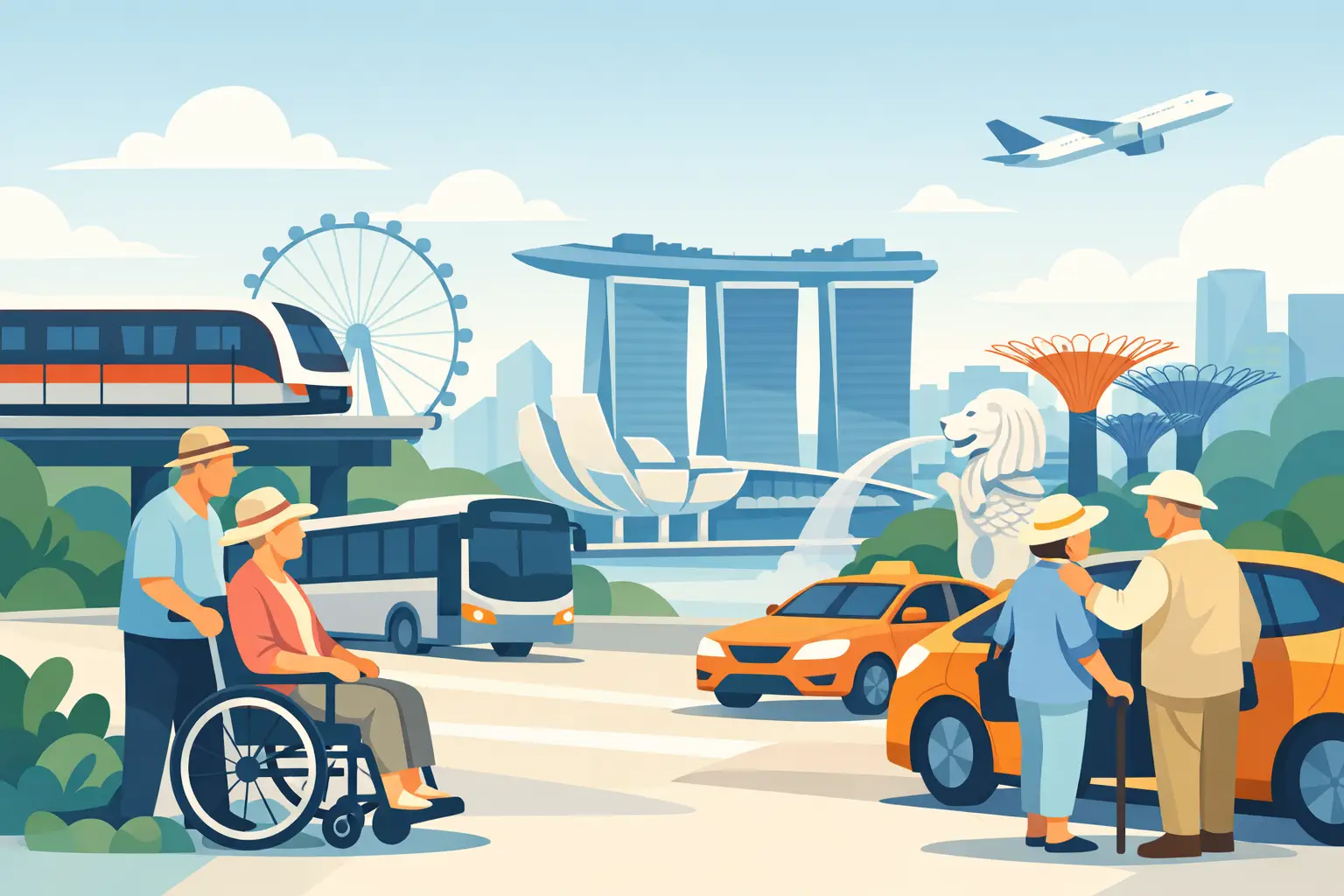
Landing in Singapore after a long flight can feel manageable for younger travelers and exhausting for older ones. That is why singapore transport for elderly travelers is less about finding the cheapest ride and more about reducing walking, waiting, lifting, and last-minute decisions.
For many families, transport becomes the part of the trip that shapes everything else. A smooth airport pickup, a driver who arrives on time, and a vehicle that is easy to get in and out of can make the day feel calm from the start. On the other hand, a crowded platform, a confusing transfer, or a long taxi queue can wear down an older traveler before sightseeing even begins.
Singapore is one of the easier cities in Asia to move around. Public transport is clean, roads are well organized, and most major visitor areas are accessible. Still, the best option depends on age, mobility, energy levels, baggage, and how tightly packed the itinerary is.
What matters most in singapore transport for elderly travelers
Older travelers do not all need the same thing. Some are active and comfortable with trains, escalators, and a fair amount of walking. Others may have knee pain, slower balance, limited stamina, or need help with a cane, walker, or wheelchair. The right transport plan starts with comfort, not assumptions.
The key questions are simple. How far will they need to walk from the drop-off point? How many times will they need to get in and out of a vehicle in one day? Will they be carrying luggage, shopping bags, or medicine? Is standing in line likely to be tiring? These details matter more than many visitors expect.
Another practical point is timing. Singapore is efficient, but heat and humidity can drain energy fast. A transport choice that looks fine on paper may feel much harder at noon after a full morning out. That is why many families choose convenience over saving a small amount on each ride.
Public transport in Singapore – good, but not always easiest
Singapore’s MRT and buses are clean, reliable, and generally friendly for seniors. Stations usually have elevators, clear signs, and priority seating. If an older traveler is comfortable walking moderate distances and managing station transfers, public transport can work well for simple routes.
The trade-off is that stations and interchanges can be bigger than they first appear. Even when elevators are available, getting from platform to exit may involve long corridors. During peak hours, trains and buses can also feel crowded, which is not ideal for travelers who need more time to board, sit down, or steady themselves.
Buses can actually be easier than trains for some trips because they avoid underground station walking. But they depend on route familiarity, and visitors may find it harder to judge where to get off. If the older traveler is already tired, a missed stop can become frustrating quickly.
Public transport is usually best when the day is light, the route is direct, and the traveler is steady on their feet. It becomes less appealing when there are multiple transfers, tight schedules, or a lot of walking before and after the ride.
Taxis and ride-hailing – better for short, simple trips
For many visitors, taxis and app-based rides are the first step up in comfort. They reduce walking, offer door-to-door service, and remove the need to stand on platforms or figure out station exits. For elderly travelers, that can be a meaningful difference.
This option works especially well for short city trips, restaurant visits, and traveling back to the hotel after a long day. It is also useful when weather changes suddenly. Singapore rain can arrive fast, and avoiding a wet walk to public transit is often worth it.
Still, there are a few limits. Availability can vary during busy periods, and ride costs may fluctuate depending on demand and time of day. There can also be uncertainty around vehicle size, luggage space, and how quickly a driver can reach a specific pickup point. For older passengers, waiting curbside while checking an app is not always ideal.
If the traveler needs a very predictable experience, especially early in the morning or after a flight, on-demand rides may not be the most reassuring choice.
Private car service is often the easiest option
When comfort and certainty matter most, private transport usually makes the most sense. A pre-booked car removes several common stress points at once. There is a confirmed pickup time, a known meeting arrangement, space planned for luggage, and less need for the older traveler to adapt on the spot.
This is particularly useful for airport transfers. After immigration and baggage claim, many seniors simply want to sit down and head straight to the hotel. They do not want to compare transport options while tired or navigate a large terminal in search of the next step.
Private service also helps with full-day planning. If the schedule includes multiple stops such as a hotel, a medical appointment, lunch, a sightseeing visit, and dinner, having a vehicle arranged in advance can reduce fatigue. The ride itself becomes a break between activities rather than another task to manage.
Families traveling with parents or grandparents often find that the value is not just in the vehicle. It is in the smoother pacing of the day. A professional driver who is punctual, patient, and familiar with local routes can keep the trip moving without rushing anyone.
Airport arrivals need special planning
Airports are where older travelers feel transport stress most quickly. Even a healthy senior may already be tired from a long flight, jet lag, dehydration, or time spent standing in queues. Add checked bags and an unfamiliar terminal, and small delays can feel much bigger.
For that reason, airport pickup should be planned with less guesswork. A confirmed transfer means the traveler is not deciding between train, taxi, or app-based ride after landing. That clarity is valuable, especially if they arrive at night, travel with medication, or need extra time to walk.
Vehicle type matters too. A low, tight sedan may not be as comfortable for someone with knee or hip stiffness. An MPV or larger vehicle can make entry and exit easier and leave more room for luggage without crowding the passenger area.
If you are booking for parents or grandparents, share as much practical information as possible in advance. Mention the number of bags, whether they use a foldable wheelchair or walker, and whether they prefer minimal walking from pickup to drop-off. Good planning prevents awkward adjustments later.
Choosing the right vehicle and daily plan
The best vehicle is not always the biggest one. It is the one that fits the traveler’s comfort level, support needs, and itinerary. For one or two older passengers with light luggage, a standard private car may be enough. For families traveling together, an MPV is often the better balance because it gives seniors more room to enter, sit comfortably, and stretch during the ride.
If the day includes several attractions, avoid packing the schedule too tightly. Singapore is compact, but moving between locations still takes time, and older travelers generally do better with fewer stops and longer rests. One well-paced day is usually more enjoyable than three rushed attractions and a tired evening.
It also helps to group places by area. That reduces backtracking and keeps drive times shorter. A practical transport plan should support the trip, not become the main event.
Small details make a big difference
Families often focus on where to go and forget to plan how the older traveler will feel between places. A few simple choices can improve the whole experience. Start earlier to avoid midday heat. Keep water and medication easy to reach. Choose pickup points with seating when possible. Leave extra time for boarding and bathroom breaks.
Communication matters too. Older travelers are more comfortable when they know what happens next. Tell them how long the ride should take, where the car will stop, and whether there will be steps, ramps, or a longer walk at the destination. Familiarity reduces anxiety.
If you are arranging transport for a parent or grandparent from overseas, reliability becomes even more important. A service like RetTours can be a practical fit when you want a pre-booked ride, fixed pricing, and a professional driver who helps make arrival in Singapore feel straightforward rather than rushed.
The best choice depends on the traveler, not just the route
There is no single answer for singapore transport for elderly travelers because older passengers vary so much. A very active 68-year-old may enjoy using the MRT for part of the trip. An 80-year-old with limited stamina may be far better served by private rides throughout the visit. Most families end up using a mix, with private transport for airport transfers and longer days, and simpler ride options for shorter outings.
The smart approach is to plan around energy, mobility, and peace of mind. When transport is easy, older travelers can focus on the reason they came in the first place – enjoying Singapore comfortably, safely, and at their own pace.