
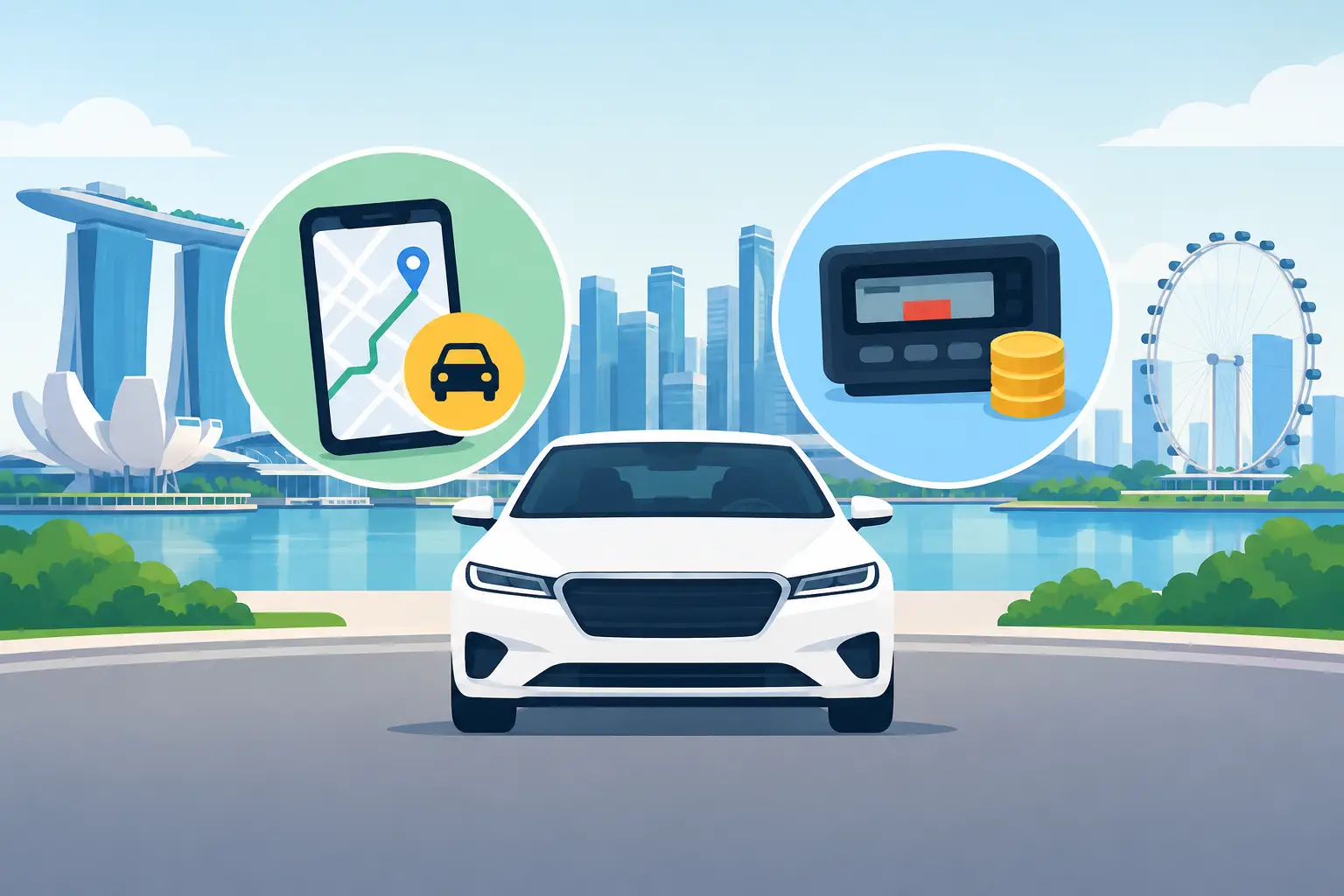
Landing at Changi after a long flight is not the moment most travelers want to calculate traffic, peak-hour charges, or how much extra luggage may affect the ride. When comparing fixed fares versus meters, the real question is simple: do you want a price you know before you travel, or a price that changes as the journey unfolds?
Both options have a place in Singapore. Metered taxis can be useful for an immediate, short trip. A pre-booked private transfer with a fixed fare is often the easier choice when timing, comfort, luggage, family needs, or group coordination matter. Knowing the difference helps you book with fewer surprises.
Fixed Fares Versus Meters: The Key Difference
A fixed fare is agreed upon when you book. You know the cost for the planned route, vehicle type, and service before your driver arrives. For airport transfers and scheduled city rides, this gives travelers a clear budget and a clear plan.
A metered fare starts from a base rate and rises according to distance and time. The final amount depends on the actual trip. This can work well when traffic is light and the route is straightforward, but the total is not always known until you reach your destination.
In Singapore, the meter is not the only factor. Depending on the service and timing, additional charges may apply for road pricing, airport pickups, late-night travel, peak periods, or booking arrangements. These charges are legitimate when clearly applied, but they can make it harder for visitors to estimate the final cost in advance.
With a fixed-price private transfer, the value is not only about the fare. It is about removing the uncertainty around the fare. This is especially helpful if you are arriving in a new city, traveling with children, carrying several bags, or arranging transportation for other people.
When a Metered Ride Makes Sense
A metered taxi can be a practical choice when you need a ride right away and are traveling alone or with one other person. For a short journey outside busy periods, it may be efficient and reasonably priced. Taxi stands at major transport points can also be convenient when you have not made advance plans.
Meters are best suited to flexible, simple trips. Perhaps you have finished dinner and need to return to your hotel, or you are going a short distance with minimal luggage. In these situations, the ability to get into the next available taxi may matter more than knowing the exact fare beforehand.
Still, convenience can change during high-demand periods. You may need to wait, and traffic can affect how quickly the meter rises. If you are on a schedule for a flight, cruise departure, business meeting, or tour reservation, the uncertainty may outweigh the convenience of hailing a ride on the spot.
Why Fixed Fares Work Well for Airport Transfers
Airport transfers are where fixed fares are often most valuable. Your flight can be tiring, immigration and baggage collection can take time, and every traveler in your party may have different needs. A reserved vehicle gives you one less decision to make after landing.
Instead of joining a taxi line and estimating the total based on traffic, you can arrange the appropriate vehicle before departure. A sedan may suit a couple with light luggage. An MPV can offer more space for a family, extra suitcases, or a small group. Larger parties may need a van or bus so everyone travels together.
A fixed fare also makes expense planning easier. Corporate travelers can organize transport before their trip and know what to submit. Families can set a clear transportation budget. Travel agents can provide clients with a confirmed arrangement instead of asking them to manage a local taxi queue after arrival.
The most useful fixed-fare booking is one that states what is included and confirms the pickup details clearly. Travelers should know the pickup location, vehicle category, passenger capacity, luggage guidance, and how to reach support if their plans change.
Flight delays and pickup timing
No transportation option can control a delayed flight, but a pre-booked service can provide a more organized response. When you share your flight details, the transport provider has context for your arrival and can coordinate pickup based on the information available.
That reassurance matters when you have young children, elderly relatives, or a tight hotel check-in schedule. It also helps travelers who may not have reliable local mobile service immediately after landing.
The Cost Question: Cheapest Is Not Always Clearest
Travelers naturally compare prices, and they should. But a fair comparison looks beyond the starting number. A metered ride may appear less expensive at first, while the final total can change with traffic, route conditions, waiting time, and applicable surcharges.
A fixed fare may not always be the lowest possible outcome for every short, quiet ride. Its advantage is certainty. You are choosing a known cost and a scheduled service rather than hoping conditions stay favorable.
For groups, fixed fares can be particularly competitive. Two or three separate taxis may cost more than one properly sized private vehicle, and they create more coordination work. Separate vehicles can arrive at different times, take different routes, and make it harder to keep a family or tour group together.
Consider the full trip cost, not just the ride cost. If a larger vehicle prevents multiple bookings, saves time at pickup, and carries everyone comfortably, it can be the better value even when its headline price is higher than a single taxi fare.
Comfort, Luggage, and Group Travel
A meter measures a trip. It does not guarantee that the vehicle is right for your trip.
Travelers often underestimate how much space they need after an international flight. Four passengers with four large suitcases may not fit comfortably in a standard sedan. A family with a stroller, shopping bags, or mobility equipment needs even more room. Booking the right vehicle in advance avoids last-minute compromises at the curb.
For group travel, the benefits go beyond luggage. One vehicle means one pickup point, one arrival time, and one shared plan. This is useful for wedding guests, company teams, school groups, cruise passengers, and multigenerational families. It also allows the driver to focus on the group rather than asking travelers to coordinate between cars.
A professional private driver can also make the first journey more comfortable. Visitors may appreciate local orientation, practical guidance on their route, and a friendly welcome from someone familiar with Singapore. That is a different service experience from simply taking the next available car.
How to Choose the Right Option
Choose a metered ride when your journey is short, immediate, flexible, and uncomplicated. It can be a sensible option if you are traveling light, do not need a particular vehicle, and are comfortable with a final fare that may vary.
Choose a fixed fare when you want to plan ahead. It is usually the stronger fit for airport pickup and drop-off, early-morning departures, business travel, families, travelers with significant luggage, and groups that need to stay together. It is also a practical choice when you want a confirmed vehicle rather than taking your chances during a busy period.
Before booking either option, think about the details that affect your experience: your arrival time, number of passengers, luggage, hotel location, required vehicle space, and whether anyone in your group needs extra assistance. A good transportation decision starts with the real needs of the journey, not only the shortest route on a map.
For travelers who value punctuality, clear communication, and an upfront price, RetTours offers private Singapore transfers designed around those needs. The goal is straightforward: arrive knowing who is meeting you, where you are going, and what you will pay.
The best ride is the one that lets you start or end your Singapore visit without unnecessary stress. If certainty matters as much as getting from point A to point B, booking a fixed fare before you travel can be a reassuring choice.