
You land in Singapore after a long flight, clear immigration, collect your bags, and now there is one question that matters: how are you getting from the airport to your hotel without confusion, delays, or surprise fares? That is where people start asking, what is point to point transfer, and whether it is better than taking a taxi or using a ride-hailing app.
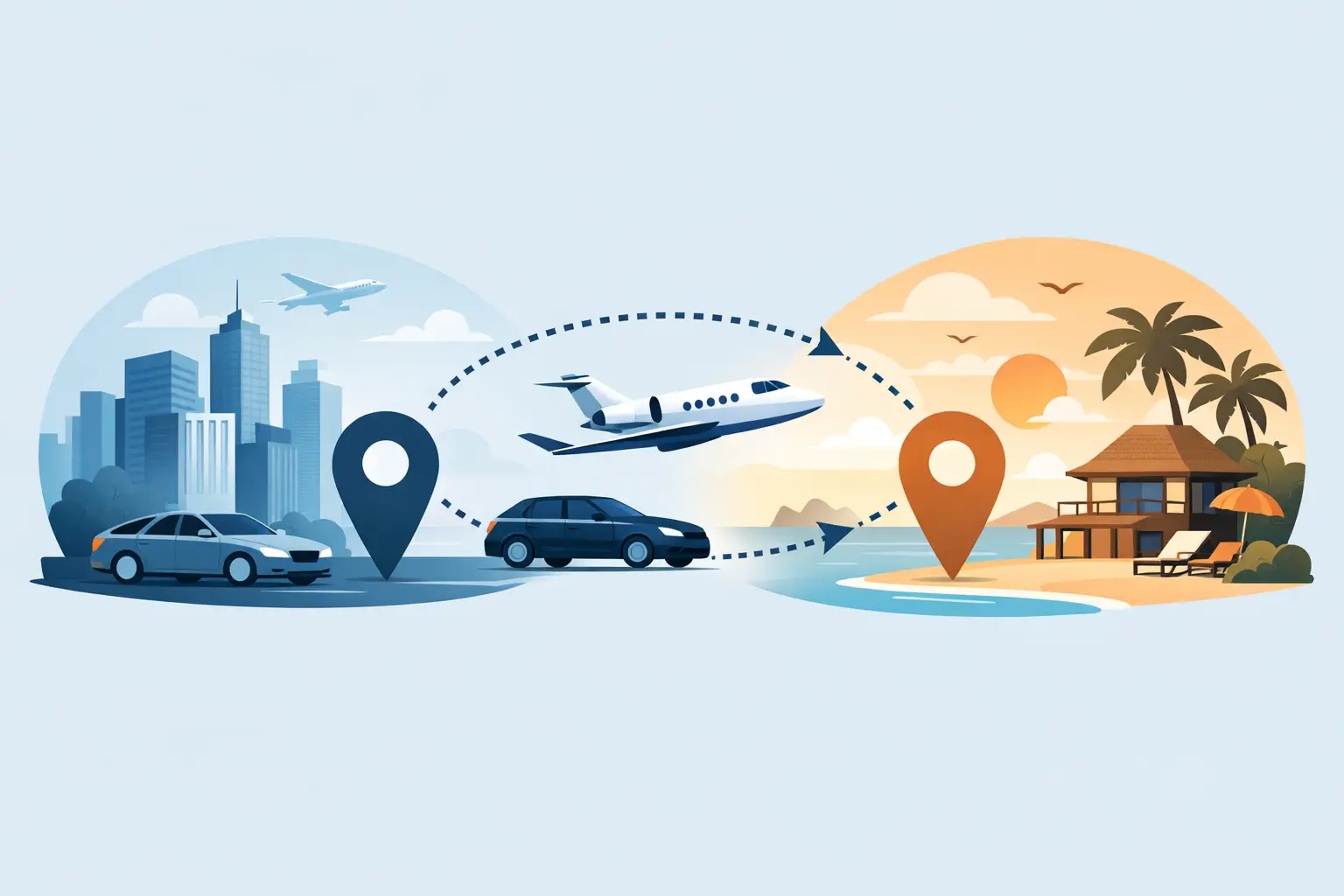
A point-to-point transfer is a pre-arranged ride from one specific location to another specific location. You choose the pickup point, choose the drop-off point, book the vehicle in advance, and the driver takes you directly there. No extra stops unless requested. No route uncertainty. No guessing the fare at the curb.
For travelers, the appeal is simple. It removes one of the most stressful parts of getting around in an unfamiliar city. You know where the ride starts, where it ends, and usually what you will pay before the trip even begins.
What is point to point transfer in simple terms?
If you are wondering what is point to point transfer in practical terms, think of it as direct private transportation between two addresses. That could be from Changi Airport to a hotel, from a hotel to a cruise terminal, from a meeting venue to a restaurant, or from one attraction to another.
The service is built around a single transport need: get me from A to B comfortably and on time. That sounds basic, but it solves several real problems for visitors. It cuts out taxi lines, reduces language misunderstandings, and gives families or groups a clearer plan, especially when luggage, children, or older passengers are involved.
Unlike public transportation, it is not shared with strangers. Unlike hourly charter, you are not paying to keep the vehicle with you for multiple stops over several hours. It is one ride, one route, one booking.
How a point-to-point transfer usually works
The process is straightforward. You enter your pickup location, your destination, your travel date and time, and the number of passengers. If you are booking with a professional transfer company, you also choose the vehicle type based on your group size and luggage.
After the booking is confirmed, your trip is scheduled in advance. For airport pickups, the driver may meet you at the arrival area or follow a pickup instruction that is shared before your trip. For hotel or city pickups, the driver arrives at the agreed location and takes you directly to your destination.
The key difference from on-demand transport is certainty. You are not opening an app at the last minute hoping a car is available nearby. You are arranging transport before you need it, which matters even more during peak travel hours, late-night arrivals, or group travel.
When point-to-point transfer makes the most sense
Not every traveler needs the same type of transport. A solo traveler with one backpack might be perfectly happy with the subway. But a point-to-point transfer becomes much more useful when the trip involves timing, coordination, or comfort.
Airport arrivals are the most common example. After a long flight, most people do not want to compare ride options on the spot or stand outside with luggage trying to work out pickup zones. A direct transfer keeps the arrival simple.
It also makes sense for families with young children, travelers carrying large suitcases, business visitors on a schedule, and groups who want to arrive together instead of splitting into multiple cars. If your trip starts or ends at a fixed time, such as a cruise boarding, event, dinner reservation, or corporate meeting, pre-booked transport gives you more control.
This is also useful for first-time visitors to Singapore. The city is efficient and easy to navigate, but arriving in a new country still comes with small frictions. A booked transfer removes many of them at once.
Point-to-point transfer vs taxi
A taxi is also a ride from one place to another, so what is the real difference? The main difference is how the trip is arranged and how much is known in advance.
With a taxi, you usually find the vehicle when you need it. The fare is often metered, which means the final price can change based on traffic, route, time of day, and surcharges. In many cases, taxis are reliable, but they are still an on-the-spot decision.
With a point-to-point transfer, the booking is made ahead of time and the service terms are clearer. The vehicle type may be selected in advance. The pickup is coordinated. The fare is often fixed upfront. For travelers who value predictability, that difference matters.
That does not mean a taxi is always the wrong choice. If you need a quick short ride and taxis are readily available, one may be fine. But if you want a smoother airport arrival, need a larger vehicle, or want to avoid uncertainty, point-to-point transfer is usually the better fit.
Point-to-point transfer vs ride-hailing apps
Ride-hailing apps are convenient, but they come with trade-offs. Availability changes by time and location. Prices can rise during busy periods. Vehicle sizes may be limited, and group transport can become complicated fast.
A point-to-point transfer is better when the trip cannot be left to chance. That includes late-night arrivals, early departures, and travel with children, seniors, or several bags. It is also helpful when you want one company to handle the logistics clearly rather than dealing with app matching, driver messaging, and changing pickup instructions.
For some travelers, ride-hailing is enough. For others, especially those visiting Singapore for the first time, a pre-booked transfer feels easier because the transport is already handled before they arrive.
What is usually included in a point-to-point transfer?
This depends on the provider, so details matter. In most cases, the core service includes a private vehicle, a professional driver, pickup at the agreed time and place, and direct drop-off at your destination.
Some providers also include flight monitoring for airport pickups, waiting time, luggage assistance, and customer support if plans change. Others may offer multilingual drivers or larger vehicles for families and groups. These details can make a big difference to the overall experience, especially when coordinating international arrivals.
This is why the cheapest option is not always the best value. A lower price means less if the instructions are unclear, the vehicle is too small, or there is no support when your flight is delayed.
How pricing typically works
Many travelers ask whether point-to-point transfer is expensive. The honest answer is that it depends on the vehicle, the route, the number of passengers, and the service level.
A private sedan for one or two travelers will cost less than an MPV for a family or a bus for a large group. Airport transfers may be priced differently from city-to-city rides. Premium vehicles cost more than standard ones. But the big advantage is that pricing is often shared upfront.
That transparency is useful because it helps you compare based on the full trip, not just the base fare. A metered or app-based ride can look cheaper at first and end up costing more once surcharges or demand pricing appear.
How to know if a transfer service is worth booking
Look for clarity. A good transfer service tells you what is included, how pickup works, what vehicle you are getting, and what happens if your plans change. It should be easy to understand before you pay.
Also look for signs of reliability. Licensed operators, professional drivers, responsive support, and clear booking confirmations matter more than flashy promises. If you are traveling with family, clients, or a group, those basics are what protect the trip from unnecessary stress.
For many visitors, that is the real value of a service like RetTours. It is not just about moving from one location to another. It is about knowing your ride is arranged, your driver is prepared, and your trip starts on the right note.
Is point-to-point transfer right for every trip?
Not always. If you are flexible, traveling light, and comfortable using trains or booking a ride on the spot, you may not need it for every journey. Singapore has excellent public transportation, and many visitors use it without issue.
But if your priority is convenience, timing, comfort, or group coordination, point-to-point transfer is often the smarter option. It reduces decisions in the moment and gives you one less thing to manage while traveling.
That is really the answer to what is point to point transfer. It is not a luxury add-on for special occasions. It is a practical transport service for people who want a direct, pre-booked, reliable ride from one place to another.
When your trip involves luggage, family, a schedule, or simply the wish to arrive without hassle, that kind of certainty is worth more than most travelers expect.