
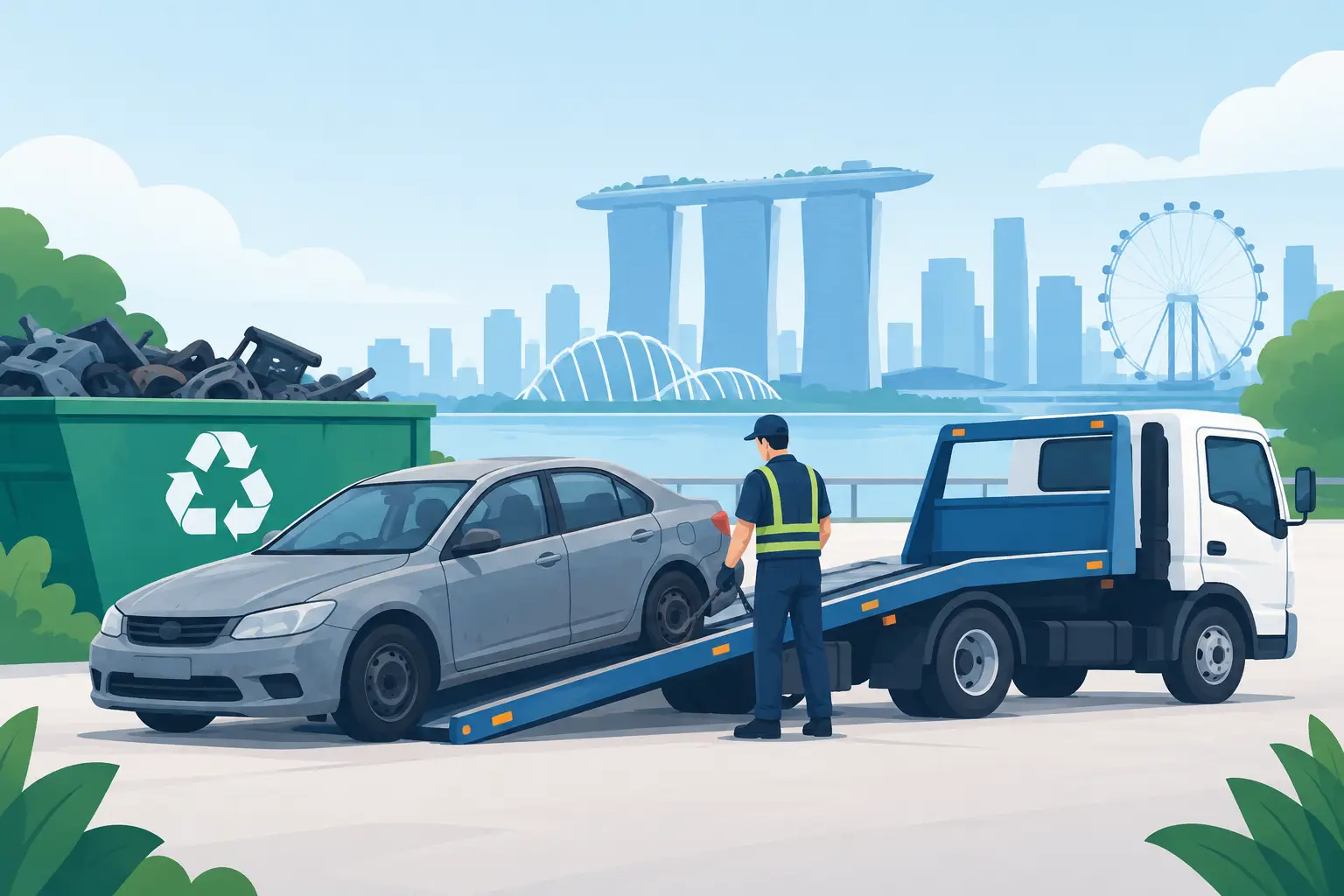
A vehicle can be sitting unused for months, yet it still carries road tax, insurance, parking costs, and legal responsibilities. So, what is vehicle disposal? In Singapore, it is the formal process of taking a vehicle permanently off the road through deregistration, followed by scrapping, exporting, or transferring it to an authorized party for disposal.
It is more than handing over old keys to a buyer or scrapyard. The vehicle must be properly deregistered, its remaining value should be checked, and the right paperwork must be completed. Getting those details right protects you from avoidable costs and gives the next party clear ownership of the vehicle.
What Is Vehicle Disposal in Singapore?
Vehicle disposal is the process of ending a vehicle’s registration and arranging its final destination. Depending on the vehicle’s age, condition, Certificate of Entitlement (COE) status, and market value, an owner may choose to scrap it, export it, sell it for parts through an authorized dealer, or sell it locally before the registration expires.
In practical terms, disposal starts when you decide the vehicle will no longer be used under its current registration. The deregistration step is central because it updates the official record and lets you apply for any eligible rebates. After deregistration, the vehicle cannot legally remain in use on Singapore roads.
This matters because an informal sale is not the same as proper disposal. If a vehicle is handed over without completing the required transfer or deregistration process, the registered owner may still face issues involving outstanding road tax, fines, or other obligations.
Why Owners Choose to Dispose of a Vehicle
Most owners dispose of a vehicle when its COE is nearing expiry, repair costs are becoming difficult to justify, or a newer vehicle better suits their needs. Businesses may also replace vehicles when passenger capacity, safety requirements, or operating costs change.
For a private owner, the decision often comes down to numbers. A well-maintained vehicle may have resale value before its COE expires. An older vehicle with substantial repair needs may be better suited for scrapping or export. There is no single best route because the right choice depends on the vehicle’s condition, remaining COE period, loan status, and current market demand.
For transport operators, reliable fleet planning is equally important. A vehicle that is no longer dependable can affect schedules and passenger comfort. That is why professional transport services typically plan replacement and disposal well before a vehicle becomes a disruption.
The Main Vehicle Disposal Options
Sell the Vehicle Locally
If the vehicle has market demand and enough usable COE remaining, selling it locally may provide the strongest return. The buyer takes over the vehicle through a formal ownership transfer rather than a disposal process.
This option requires clear agreement on the price, transfer date, outstanding loan settlement, insurance, and inspection requirements where applicable. Do not release the vehicle until payment and transfer arrangements are properly confirmed. A low sale price can still be preferable to last-minute disposal if it saves time and removes ongoing costs.
Scrap the Vehicle
Scrapping means sending the vehicle to an authorized scrap yard for dismantling. It is commonly chosen for vehicles that are old, damaged, uneconomical to repair, or close to the end of their registration period.
Once scrapped, the vehicle is permanently removed from road use. You may receive a scrap value based on materials and parts, while eligible owners can also apply for applicable rebates after deregistration. Keep the official paperwork from the scrap yard, as it may be needed to complete the process.
Export the Vehicle
Exporting can be worthwhile if overseas demand is stronger than local demand. An exporter usually manages the shipment and sale abroad, but owners should still understand exactly who is handling deregistration and export documentation.
The timeline matters. Vehicles intended for export generally need to be exported within the required period after deregistration. If the process is delayed or documents are incomplete, rebates and final payments can be affected. Work with an established exporter and make sure every agreement states the vehicle price, collection arrangement, and responsibility for paperwork.
Deregister and Retain Eligible Components
In some cases, owners may deregister a vehicle while retaining items that can be used or sold separately, subject to the applicable rules. This can include registration marks or other approved components. Requirements can change, so verify the current procedure before making plans around retained items.
What Happens During Deregistration?
Deregistration is the official step that ends the vehicle’s registration. Before proceeding, owners should check whether there are outstanding matters such as financing, unpaid road tax, fines, or insurance questions. A vehicle under a loan may require the finance company to release its interest before the transaction can be completed.
After deregistration, owners may be eligible for rebates based on the vehicle’s remaining COE and, where relevant, Preferential Additional Registration Fee (PARF) value. Eligibility and amounts depend on factors including the vehicle type, registration date, age, and deregistration date. These rebates are not the same as a sale price, so calculate them separately when comparing offers from dealers, exporters, or scrap yards.
The process may sound administrative, but timing can make a real financial difference. Waiting until the last possible day can limit options, especially if the vehicle needs repairs, inspections, loan clearance, or transport to a scrap yard or exporter.
A Practical Checklist Before You Hand Over the Vehicle
Before agreeing to any disposal arrangement, take a few careful steps:
- Confirm the registered owner details and clear any outstanding finance, road tax, or penalties.
- Compare at least a few offers if time allows, separating the vehicle purchase price from any expected rebates.
- Ask who will complete deregistration, scrapping, or export documentation and when it will be done.
- Keep copies of receipts, transfer records, deregistration confirmation, and all written agreements.
- Remove personal items, parking labels, stored address information, and any linked payment or navigation data.
It is also sensible to check your insurance policy. Coverage may need to be canceled, transferred, or adjusted after the ownership transfer or deregistration date. If you have an existing seasonal parking arrangement, review that separately as well.
Common Mistakes to Avoid
The most common mistake is assuming the buyer will handle everything without getting written confirmation. Another is focusing only on the cash offer while overlooking possible rebates, outstanding loan charges, towing costs, or administrative fees.
Owners should also avoid leaving a deregistered vehicle in an unauthorized location. Once it is no longer registered for road use, it must be dealt with according to the rules and moved through an approved channel.
Be cautious with unusually high offers that come with vague terms. A trustworthy dealer or exporter should explain the collection date, payment method, documents required, and whether the quoted amount includes all fees. Clear communication is not a bonus in this process. It is how you avoid disputes later.
When to Start Planning Vehicle Disposal
Start checking your options several months before the vehicle’s COE expiry or planned replacement date. This gives you time to compare local sale, export, and scrap values without making a rushed decision.
For families and businesses, timing vehicle disposal with a replacement vehicle can also prevent unnecessary transport gaps. If dependable rides are needed while plans are being finalized, pre-booked private transportation can keep airport journeys, meetings, and group travel running on schedule without relying on last-minute arrangements.
Vehicle disposal is ultimately about closing one chapter properly. Take time to verify the figures, complete the paperwork, and choose a reputable party. A clear process lets you move on with confidence, whether your next trip is a daily commute, a new vehicle, or simply a smoother way to get around Singapore.