Uncategorized

Chauffeur Service Singapore Comparison Guide

Chauffeur Service Singapore Comparison Guide

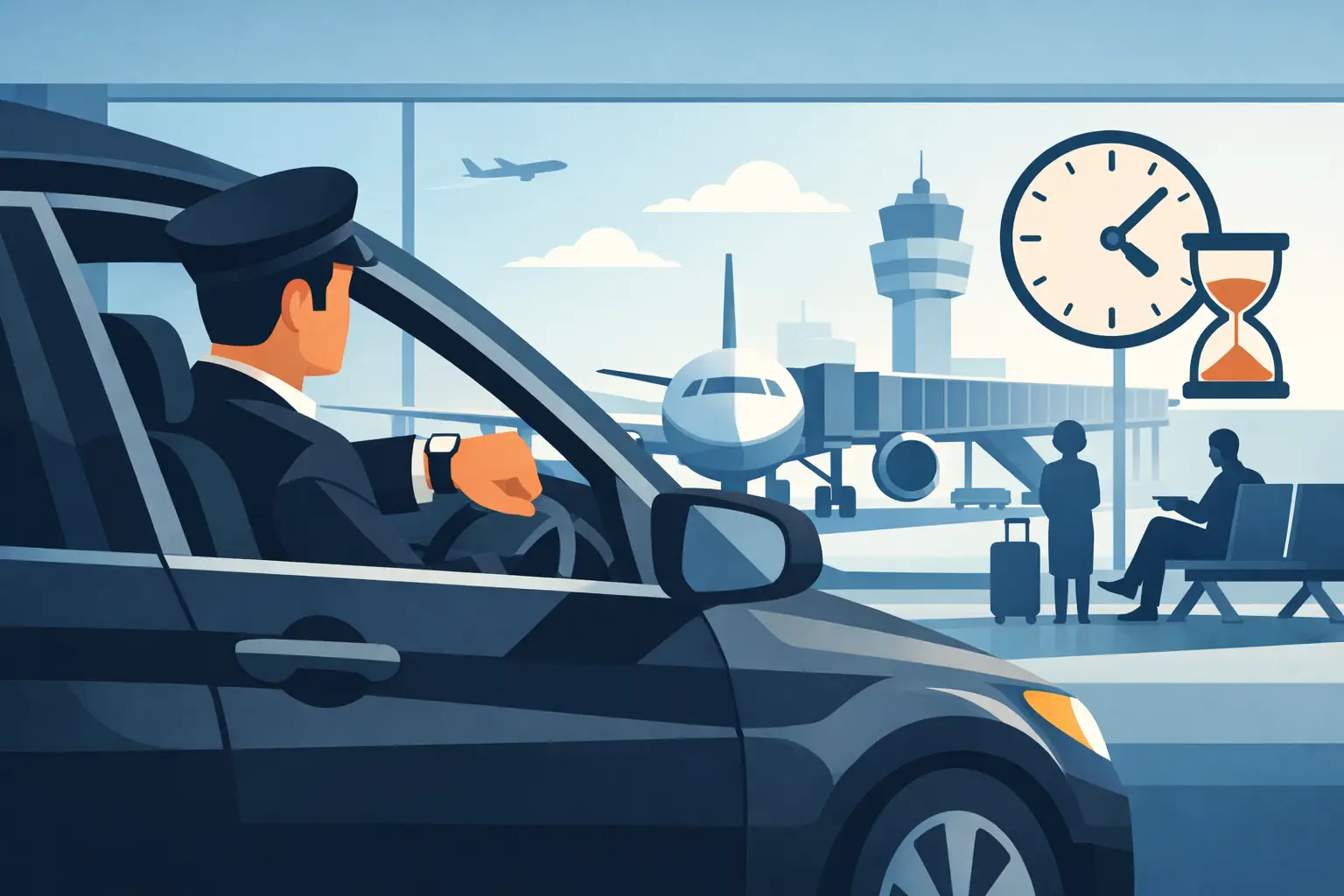
Landing at Changi after a long flight is not the moment to guess whether the next ride will fit your luggage, accept your card, or charge more because demand suddenly spiked. That is why a proper chauffeur service Singapore comparison matters. For most visitors, the real question is not simply who can drive you from point A to point B. It is who can make the transfer clear, punctual, comfortable, and easy to manage before you even land.

Singapore is one of the easiest cities in the world to get around, but travelers still face very different transport choices. Standard taxis work for some trips. Ride-hailing apps can be convenient when timing is flexible. Pre-booked chauffeur services are usually the stronger choice when you care about airport coordination, fixed rates, family travel, business schedules, or moving a group without confusion. The best option depends on what kind of certainty you need.

How to use a chauffeur service Singapore comparison

A useful comparison should go beyond price alone. A lower headline fare can look attractive until you realize it does not include waiting time, airport meet-and-greet support, tolls, late-night surcharges, or the right vehicle size. Travelers often compare the wrong things and end up with the wrong service.

Start with the trip itself. An airport arrival with children, seniors, or several suitcases is different from a hotel-to-marina transfer for one business traveler. A city meeting schedule with multiple stops is different from a half-day family outing. Once the journey is clear, it becomes much easier to compare providers fairly.

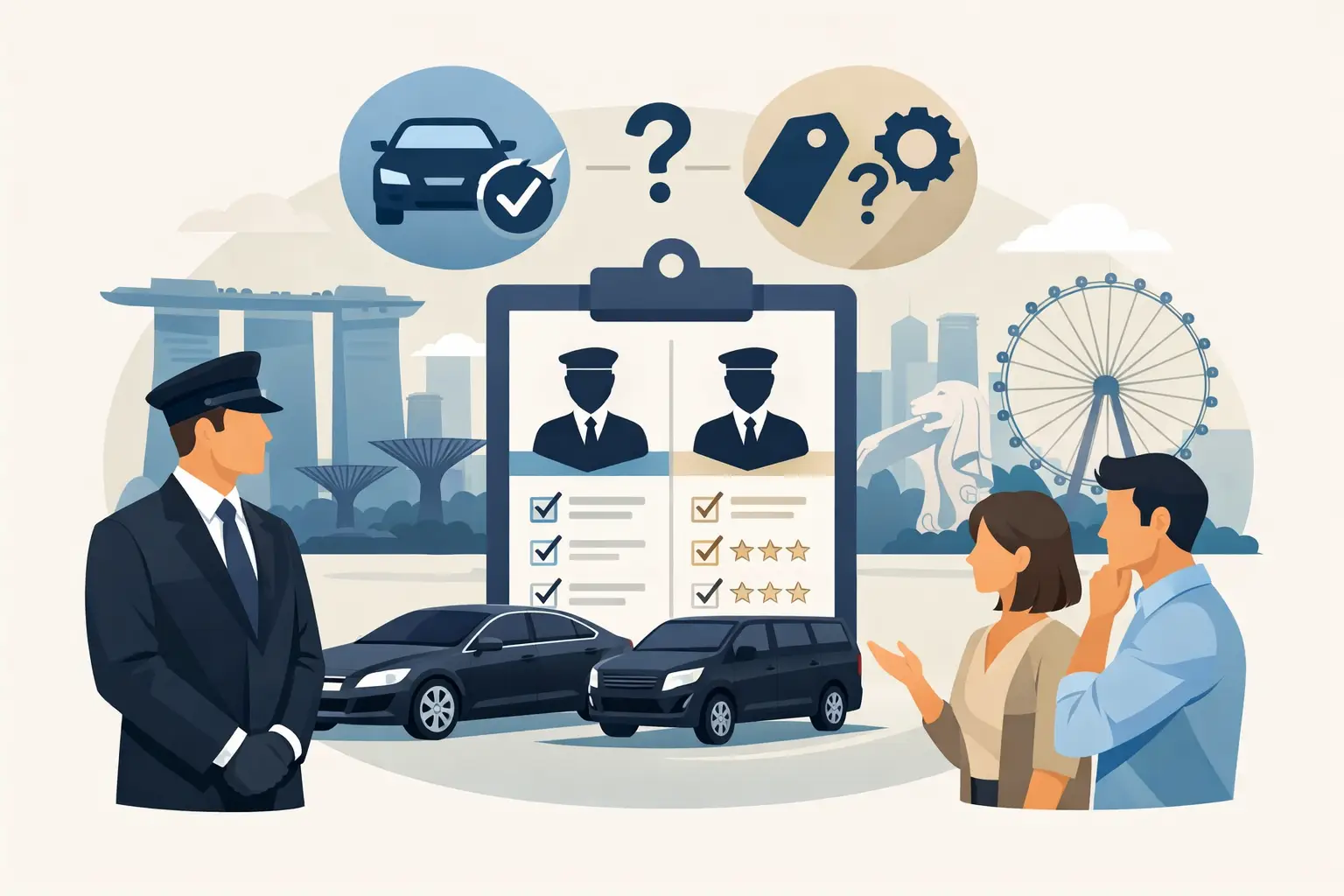
The most practical way to evaluate a service is to look at five points together: pricing clarity, vehicle suitability, driver professionalism, booking flexibility, and operational support. If one of those is weak, the entire experience can feel stressful even if the car itself is fine.

Price comparison is only useful when rates are clear

Fixed pricing is one of the biggest reasons travelers choose a chauffeur service over an on-demand ride. With a pre-booked transfer, you should know what you will pay upfront. That matters even more for airport pickups, where delays, baggage collection, and arrival procedures can change timing.

If a provider advertises low rates but leaves key charges vague, compare with caution. Ask whether the quoted price includes airport pickup coordination, parking, waiting time, extra stops, and peak-period adjustments. A clear price is usually more valuable than the cheapest number on the page.

This is especially true for groups. A family of five might assume they can save money with a smaller vehicle, but if luggage does not fit and a second ride is needed, the cheaper option quickly becomes the expensive one. Transparent pricing helps you choose the right vehicle from the start instead of solving problems at the curb.

What travelers should check in the quote

A good quote should make the service easy to understand. You should be able to tell whether it is one-way or hourly, what vehicle class is included, how many passengers and bags it can handle, and what happens if your flight is delayed. If those basics are missing, you are not really comparing services yet.

Vehicle choice changes the whole experience

Not every trip needs a premium sedan, and not every traveler should book the smallest option available. The right vehicle depends on passenger count, luggage, comfort expectations, and the type of trip.

For solo travelers or couples, a standard sedan is often enough for city transfers and airport drop-offs with light luggage. Families and small groups usually benefit from an MPV because it offers easier entry, more luggage space, and less squeezing between seats. Corporate travelers may prefer a premium vehicle for client-facing pickups or formal schedules. Larger groups need vans, minibuses, or full-size buses that can keep everyone together.

This is where many comparisons become unrealistic. Two services may both claim to offer airport transfers, but one may focus mainly on sedans while another can handle mixed group sizes from a single booking. If your travel party includes children, elderly parents, or multiple arrival bags, vehicle range is not a small detail. It affects comfort, timing, and how smoothly the trip begins.

Airport pickup quality matters more than most travelers expect

Airport transfers look simple on paper, but the details matter. A strong airport pickup service tracks arrival timing, understands terminal procedures, and has a clear plan for meeting passengers. A weaker service may still send a driver, but if communication is poor or waiting rules are unclear, the first impression can unravel fast.

In any chauffeur service Singapore comparison, airport process should be one of the first things you check. Does the company offer meet-and-greet support? Will the driver wait if immigration takes longer than expected? Is customer support available if your flight changes? These are not extras. For many visitors, they are the whole reason to pre-book.

This is also where licensed, service-focused operators stand out. Visitors arriving in a new country often want more than transport. They want reassurance that someone is monitoring the booking, responding quickly, and ready to help if plans shift. A punctual driver is essential, but so is a responsive support team behind the booking.

Hourly hire versus point-to-point transfers

Some travelers compare all chauffeur services as if every booking is the same. It is not. If you only need a ride from the airport to the hotel, a point-to-point transfer usually makes sense. If your day includes meetings, shopping stops, attractions, or a custom city route, hourly hire is often the better value.

Hourly service gives you flexibility, but only if the terms are clear. Ask whether there is a minimum booking duration, how overtime is charged, and whether the same driver stays with you throughout the trip. For business travelers and families trying to maximize a day in Singapore, this structure can reduce a lot of coordination stress.

There is a trade-off, though. If your schedule is fixed and simple, hourly hire may cost more than you need. Point-to-point service is more efficient when the route is straightforward. The better choice depends on how much movement your day actually includes.

Driver quality is part of the product

A chauffeur service is not just a vehicle booking. The driver is part of the experience. Professionalism shows up in punctuality, communication, route knowledge, safe driving, and how comfortable passengers feel asking questions.

For visitors in Singapore, approachable drivers can make a noticeable difference. A driver who confirms pickup clearly, helps with bags, and offers basic local orientation adds real value, especially after a flight or during a packed itinerary. This matters for international travelers who may prefer multilingual communication or want simple guidance without having to navigate every local detail themselves.

That does not mean every traveler needs luxury-style formality. In many cases, what people want most is a driver who is courteous, calm, and reliable. Friendly professionalism often matters more than image.

Group transport needs a different comparison standard

When transporting a larger family, tour party, or business group, the comparison changes. At that point, the question is less about ride comfort for one person and more about coordination. Can one provider manage everyone at once? Can they support different vehicle sizes if the group is split? Can they handle luggage, timing, and multiple stops without confusion?

This is where experienced transport companies usually outperform general ride options. Group movement is about logistics. You need a provider that can plan around arrival windows, hotel pickup timing, event schedules, and realistic boarding times. A cheap rate does not help if half the group ends up waiting in the wrong place.

For this reason, travelers and agents often prefer operators that can handle sedans, MPVs, and larger buses under one service model. It simplifies communication and lowers the risk of fragmented bookings.

What a dependable provider should offer

A strong service usually looks consistent across the full booking journey. The quote is clear. The vehicle options match the trip. The booking process is simple. The driver arrives on time. Support is available if something changes.

That consistency is often a better sign than flashy positioning. In Singapore, many travelers are not looking for luxury for its own sake. They want comfort, safety, and certainty. They want to know the booking is confirmed, the fare is fixed, and the pickup will happen as promised.

That is why providers like RetTours appeal to airport arrivals, families, and small groups who value practical reliability over guesswork. The service standard people remember is often very simple: easy booking, fair pricing, responsive support, and a professional driver who makes the trip feel organized from the start.

The best choice depends on your trip, not just the rate

If you are comparing chauffeur services in Singapore, the smartest move is to match the service to the situation. For a basic solo trip across the city, a simple transfer may be enough. For airport arrivals, business appointments, family travel, or group transport, pre-booked chauffeur service usually offers more control and fewer surprises.

The right provider should make things easier before you travel, not more complicated after you arrive. If the pricing is clear, the vehicle fits, the support is responsive, and the driver is professional, that is usually the comparison that matters most. Book the service that removes uncertainty, and the rest of your trip starts on much better footing.

Read More...


Private Airport Pickup in Singapore

Private Airport Pickup in Singapore

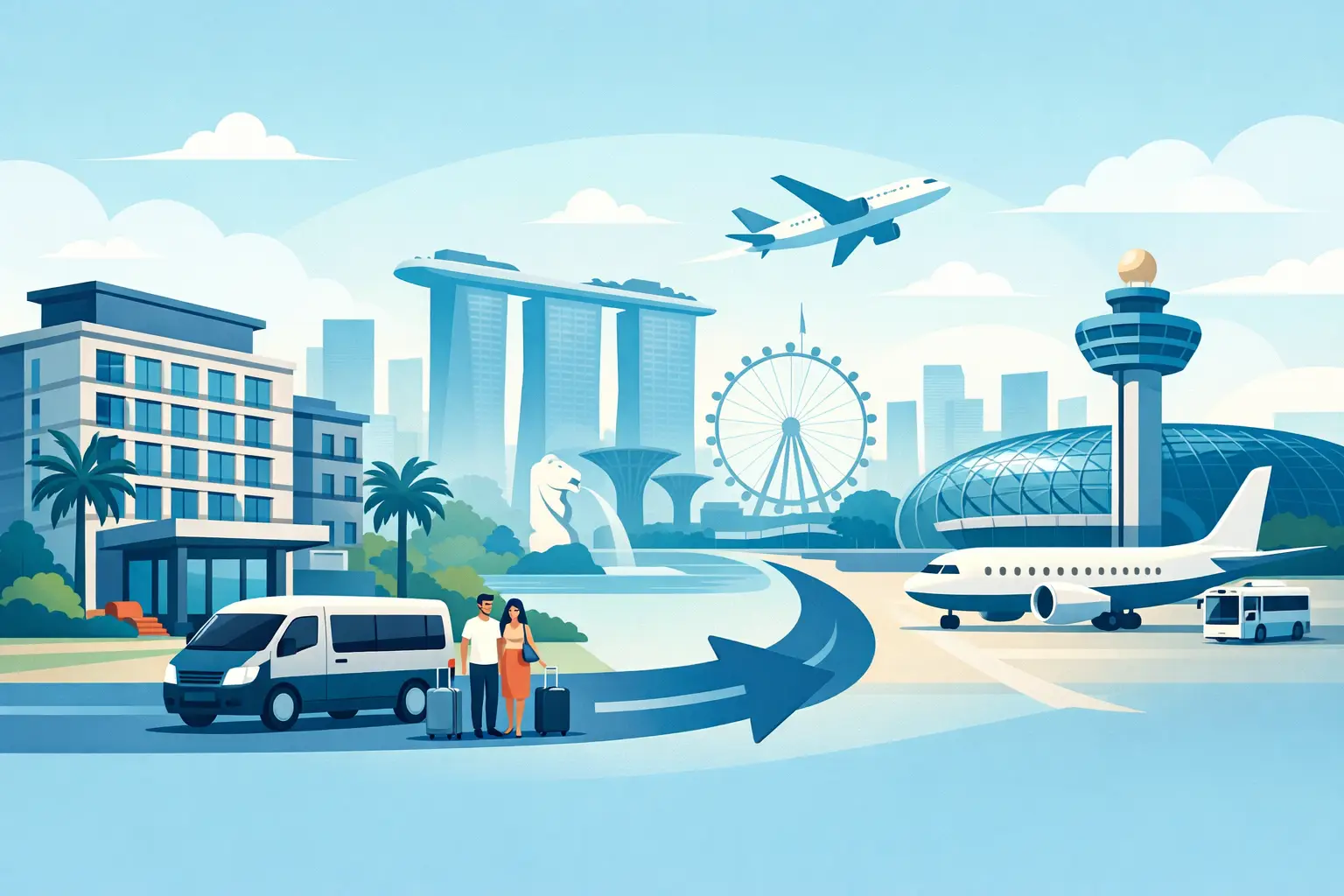
You notice it the moment the plane lands. Everyone wants to move at once, phones are reconnecting, luggage takes longer than expected, and the simplest task – getting from the airport to your hotel – suddenly feels harder than it should. That is exactly where private airport pickup makes a difference. Instead of figuring things out curbside, you step into a pre-booked ride with a known price, a confirmed vehicle, and a driver expecting you.

For many travelers arriving in Singapore, that certainty matters more than anything else. The city is organized and well connected, but arriving in a new country still comes with small pressures: immigration timing, baggage delays, tired children, elderly family members, or the need to reach a meeting without wasting time. A private transfer is not just about comfort. It is about removing avoidable friction from the first hour of your trip.

Why private airport pickup matters after a long flight

Airport arrival is one of those moments where small problems feel bigger than they are. If your phone battery is low, your group is split between different bags, or you are traveling with strollers and suitcases, even a short wait for transport can become frustrating. Public transportation may be a good option for some visitors, but it is not always the easiest choice when you are carrying luggage or arriving with children or older parents.

Taxis can work well too, but there are trade-offs. Availability can vary during peak periods, and if you are traveling as a larger group, you may need more than one vehicle. Pricing may also feel less predictable to visitors who prefer to know the total cost before they leave the airport. With private airport pickup, the main benefit is clarity. You know who is picking you up, what type of vehicle is coming, and what you are likely to pay before your trip begins.

That level of planning is especially useful in Singapore, where travelers often arrive with full itineraries. Some are heading straight to a hotel in the city, others to a cruise terminal, a business appointment, or a residential address. When the ride is already arranged, the arrival process becomes simpler and more direct.

What a good private airport pickup service should include

Not every transfer service offers the same experience. On paper, many providers look similar. In practice, the difference usually comes down to consistency, communication, and how well they handle real travel conditions.

A dependable service starts with upfront pricing. Travelers should be able to book knowing the rate in advance, without hidden booking charges or last-minute surprises. That matters for families watching budgets, business travelers filing expenses, and travel planners managing several passengers at once.

Punctuality is the next non-negotiable. A professional driver should arrive on time, track the booking properly, and understand airport pickup procedures. If a flight is delayed, the service should be able to respond sensibly instead of turning a delay into another problem for the traveler.

Vehicle fit also matters more than many people expect. A sedan may be fine for one or two travelers with light luggage, but it may not work for a family of four with checked bags, a stroller, and carry-ons. MPVs and larger vehicles are often the better choice for groups, even if the passenger count seems modest. Booking the right size from the start avoids the awkward moment of trying to make luggage fit when everyone is tired.

Then there is the driver. Travelers remember drivers who are calm, polite, and helpful. In a place like Singapore, where many visitors are arriving for the first time, it helps when the driver can offer basic local orientation, communicate clearly, and make the ride feel welcoming rather than purely transactional.

Who benefits most from private airport pickup

Private airport pickup is not only for luxury travelers. In reality, it often makes the most sense for people who want a practical, low-stress arrival.

Families are one of the clearest examples. Traveling with children changes the math of arrival. You are not just moving people – you are managing bags, snacks, documents, and everyones energy level. A pre-arranged vehicle gives families space and predictability at the exact moment they need it most.

Small groups benefit for similar reasons. Friends traveling together often assume they can decide transport after landing, but group arrivals can get messy fast. People walk at different speeds, some need the restroom, others are waiting for baggage, and suddenly one easy taxi becomes a coordination issue. A booked private ride keeps everyone together.

Corporate travelers value time and reliability. If you are arriving for meetings, events, or client visits, the last thing you want is uncertainty at the curb. A private transfer supports a more professional schedule and reduces the chance of delays caused by transport confusion.

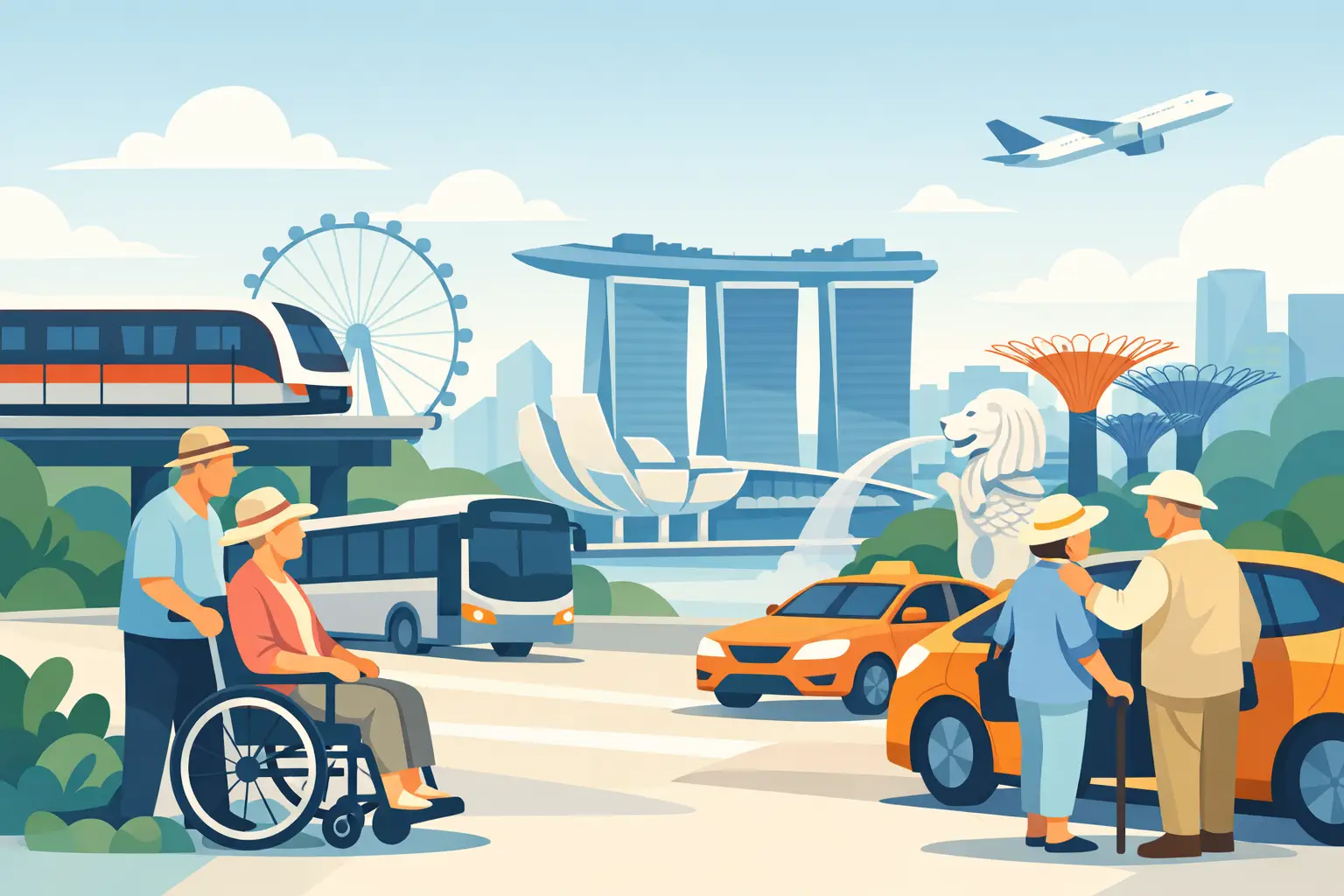
It is also a strong fit for elderly travelers or multigenerational groups. Less walking, less standing around, and less need to navigate unfamiliar transport systems can make the first part of the trip much more comfortable.

Private airport pickup versus taxi or public transport

There is no single right option for every traveler. The best choice depends on budget, luggage, arrival time, and who is traveling with you.

Public transport is efficient in Singapore and works well for solo travelers who pack light and do not mind transferring between lines or stations. It is often the lowest-cost option, but it is not always the easiest after a long flight.

Taxis offer convenience and flexibility, especially for individuals or couples. If you are comfortable with on-arrival decisions and your group is small, a taxi may be perfectly fine. The trade-off is that the experience can feel more variable, particularly for first-time visitors who prefer fixed arrangements.

Private airport pickup sits in the middle of convenience and planning. It is usually the better choice when certainty matters more than saving a small amount. That is especially true for late-night arrivals, travelers with extra luggage, families, and anyone who wants the airport exit to feel straightforward from start to finish.

How to choose the right service in Singapore

Start with licensing and service focus. A provider that specializes in airport transfers and ground transport is generally better prepared than a company that treats pickups as an add-on. Experience shows up in the details – flight coordination, vehicle planning, clear meeting instructions, and responsive customer support.

Next, check whether rates are transparent. If pricing is vague or hard to confirm before booking, that can be a warning sign. Travelers usually want simple answers: what vehicle they are getting, what the total price includes, and what happens if plans change.

Flexibility matters too. Flights get moved, baggage is delayed, and itineraries change. A service that offers reasonable cancellation terms and responsive support is worth more than a slightly cheaper booking that becomes difficult to manage later.

Reviews can also tell you a lot, especially when they mention punctual drivers, smooth airport arrivals, and friendly communication. The best feedback often highlights practical things, not marketing language. People remember when a driver was easy to find, helped with bags, or made them feel comfortable in a new city.

Why vehicle choice is part of the experience

A good airport transfer is not only about being picked up. It is also about arriving in a vehicle that matches the trip you are actually taking.

For a couple on a short city stay, a standard sedan may be the most efficient option. For families, an MPV often gives the extra room needed for luggage and a more relaxed ride. For larger groups, pre-booked vans or buses can save both time and coordination. Splitting a group across multiple taxis can seem simple at first, but it increases the chance of confusion, different arrival times, and communication problems.

This is where experienced local operators stand out. Companies such as RetTours build their service around these practical decisions, with vehicle options suited to solo travelers, families, corporate guests, and tour groups. The value is not only in the ride itself. It is in matching the booking to the real needs of the arrival.

A smoother start sets the tone for the whole trip

Travelers often spend weeks planning flights, hotels, and attractions, then leave airport transport undecided until the last minute. That can work, but it can also turn the first hour in Singapore into an unnecessary hassle. Private airport pickup is a simple way to make arrival feel organized, comfortable, and predictable.

When your ride is already arranged, you do not have to negotiate the next step while tired or juggling luggage. You can focus on getting where you need to go, whether that is a hotel, a meeting, or the start of a family vacation. Sometimes the best travel decisions are not the flashy ones. They are the ones that make everything else run more smoothly.

Read More...
Should Tourists Prebook Airport Transfers?

Should Tourists Prebook Airport Transfers?

You land after a long flight, your phone battery is low, the airport Wi-Fi is patchy, and everyone seems to be heading for the same taxi line. That is the moment many travelers start wondering: should tourists prebook airport transfers, or is it fine to sort out a ride after arrival? The honest answer is that it depends on your trip, your budget, and how much uncertainty you are willing to handle right after landing.

For many visitors, especially those arriving in a new city for the first time, prebooking is less about luxury and more about reducing friction. You know who is picking you up, what the ride should cost, and how you are getting from the airport to your hotel without having to make quick decisions while tired. That kind of clarity matters more than people expect.

Should tourists prebook airport transfers for every trip?

Not always. Some travelers are comfortable using public transit, ride-hailing apps, or airport taxis on the spot. If you are traveling light, arriving during off-peak hours, and already know the city well, booking ahead may not be necessary.

But there are many situations where prebooking is the smarter choice. If you are traveling with children, older family members, several suitcases, or a group, the value of having the right vehicle ready becomes obvious very quickly. The same applies if you are landing late at night, during a holiday period, or after a long-haul flight when you simply do not want to deal with queues and guesswork.

Prebooking also tends to make more sense in places where visitors want a clean, direct arrival experience. Singapore is a good example. The airport is efficient and transport options are strong, but many tourists still prefer to lock in a private transfer because it gives them a fixed plan from the moment they land.

What you gain by booking ahead

The biggest benefit is certainty. A prebooked transfer gives you a confirmed ride, a known meeting process, and pricing that is agreed in advance. That removes several common arrival problems at once.

First, there is time. Even in a well-run airport, finding transportation after arrival can take longer than expected. You may need to queue, compare options, wait for a larger vehicle, or coordinate multiple cars for a group. When your transfer is already arranged, you skip most of that.

Second, there is cost control. Tourists often worry about paying more than expected, especially in unfamiliar destinations. Fixed rates are useful because they let you budget properly. You are not trying to estimate traffic-based fares or deal with sudden price spikes at busy times.

Third, there is comfort. After a flight, many people just want a smooth ride to their hotel. A prebooked service usually makes that easier by matching the vehicle to the number of passengers and bags. That matters if you have strollers, shopping luggage, golf clubs, or simply more than one suitcase per person.

There is also the human side. A professional airport pickup can provide more than transportation. A helpful local driver can point out key landmarks, explain where to eat nearby, or help first-time visitors understand the area around their hotel. For travelers who want a calm start, that makes a real difference.

When prebooking may not be necessary

It is worth being realistic. Prebooking is not always the cheapest or most flexible option for every traveler.

If you are a solo traveler with one backpack, arriving in daytime, and staying somewhere well connected by train or standard taxi routes, booking on arrival can work perfectly well. The same is true if your plans are still changing and you do not want to commit to a pickup time too early.

Some tourists also prefer to keep every step of the trip open-ended. They may decide to stop for a meal, change hotels, or travel to a different part of the city after landing. In those cases, arranging transport on the spot can feel more convenient.

The key point is this: prebooking is most valuable when the cost of uncertainty is high. If delays, confusion, or vehicle shortages would create stress for your group, booking ahead is usually worth it. If you are very flexible and comfortable adapting on arrival, you may not need it.

Should tourists prebook airport transfers in Singapore?

For Singapore, many tourists will find that prebooking is a practical choice rather than an unnecessary extra. The city is organized, safe, and easy to get around, but airport arrivals still come with familiar travel pressures. Families may need child-friendly space, groups may need larger vehicles, and first-time visitors often want a direct trip without having to compare transport options at the terminal.

A prebooked airport transfer is especially useful if you are traveling with several people and want everyone to stay together. Instead of splitting into separate taxis or trying to fit luggage into whatever vehicle is available, you can reserve the right size from the start. That is often more efficient and, for groups, can be more cost-effective than people assume.

Business travelers also tend to benefit from booking ahead. If you have meetings scheduled soon after landing, a fixed pickup reduces the chance of delay. You are not spending your arrival time troubleshooting transportation when you should be getting to your destination.

Services like RetTours are built around that need for clarity – fixed rates, professional drivers, and support before and after booking. For tourists who value punctuality and a straightforward arrival, that kind of setup removes a lot of guesswork.

The trade-offs tourists should consider

Prebooking has clear advantages, but it is still worth checking the details before you commit. Not every transfer service offers the same level of flexibility.

One issue is flight delays. Good providers track arrivals or offer a reasonable waiting window, but travelers should confirm that in advance. If your flight lands late, you want to know whether your driver will still be there and whether extra waiting charges apply.

Another point is cancellation and change policy. Travel plans change often. If your hotel changes, your arrival time shifts, or your group size increases, you need a service that can adapt without making the process difficult.

You should also think about the exact type of service you want. A standard transfer is fine for many trips, but larger families and groups may need an MPV, van, or bus. Booking ahead only helps if the provider can match your actual needs.

Finally, compare convenience, not just headline price. A cheaper ride is not always the better value if it means uncertain pickup, limited luggage space, or poor communication after you land.

How to decide if prebooking is right for your trip

A simple way to decide is to ask what kind of arrival you want. If you want the lowest possible cost and are happy to problem-solve at the airport, you may be fine without a reservation. If you want your arrival sorted before you board the plane, prebooking is usually the better fit.

It also helps to look at your trip in practical terms. Are you traveling with kids? Do you have elderly parents with you? Are you arriving late? Do you have four suitcases and two carry-ons? Is this your first time in the destination? Each yes pushes prebooking from optional to sensible.

For groups, the decision is even easier. Coordinating several travelers after arrival can be slow and frustrating. A confirmed airport transfer keeps everyone moving together and avoids the usual confusion over who is taking which car.

The same logic applies if you care about a smooth first impression. Your airport arrival sets the tone for the rest of the trip. Starting with a clear pickup plan, a professional driver, and a direct ride to your hotel often feels better than standing in line while checking fares on your phone.

A good rule is this: if transportation is something you do not want to think about after landing, book it before you fly. Travel already comes with enough moving parts. When your airport transfer is settled in advance, you can spend less energy on logistics and more on enjoying where you just arrived.

The best choice is not the same for every tourist, but peace of mind has real value – especially at the airport, when a simple ride can shape your whole first day.

Read More...
Do Airport Drivers Wait for Delays?

Do Airport Drivers Wait for Delays?

A delayed flight can turn a simple arrival into a frustrating one. If you are wondering, do airport drivers wait for delays, the short answer is often yes – but it depends on the type of service you book and the company’s policy.

That distinction matters more than most travelers expect. Some airport transfer providers actively monitor incoming flights and adjust pickup timing automatically. Others treat your booking like a fixed appointment, which can lead to extra waiting charges, missed pickups, or a rushed handoff after landing. If you are arriving in Singapore, especially with family, luggage, or after a long-haul flight, knowing the difference can save a lot of stress.

Do airport drivers wait for delays or not?

In many professional airport transfer services, drivers do wait for delays when the company tracks your flight number. That is usually part of a pre-booked airport pickup service, where the pickup time is linked to your actual arrival rather than only the original schedule.

But not every service works this way. Standard taxis, some ride-hailing options, and cheaper transfer operators may not monitor flights at all. In those cases, the booking is tied to the time you entered, not the real landing time. If your flight is late, the driver may leave, cancel, or start charging waiting time based on the original booking.

This is why the question is not only do airport drivers wait for delays, but also what kind of airport driver you booked. A licensed private transfer company usually has a clearer process. A casual on-demand ride may not.

What determines whether a driver will wait?

The biggest factor is whether the provider uses flight tracking. When you give your flight number during booking, the operations team can watch for delays, early arrivals, and actual touchdown times. That allows the driver dispatch time to shift with your flight.

The second factor is the waiting policy after landing. Even if a driver tracks your flight, there is usually a grace period once the plane arrives. That buffer accounts for immigration, baggage claim, and the walk to the meeting point. For international arrivals, this grace period is often longer than for domestic flights because the airport process takes more time.

The third factor is the service model itself. Chauffeur-style airport transfers are built around scheduled pickups and customer support. Ride-hailing apps are built around immediate availability. Both can get you from the airport to the city, but the support during delays is very different.

Communication also matters. If your flight changes at the last minute and your booking does not include the correct flight details, even a good provider may struggle to adjust. The more accurate your booking, the smoother the pickup.

How professional airport pickup services handle delays

A reliable airport transfer company usually plans around real-world travel problems. Flights get delayed. Passengers take longer at immigration. Bags arrive late. Families with children move more slowly than solo business travelers. Good service accounts for that.

Typically, the process works like this. You book in advance, provide your flight number, and receive a confirmed pickup. On the day of travel, the operator monitors the arrival status. If your flight lands late, the driver schedule is adjusted. When you arrive, you still have a set amount of complimentary waiting time before extra charges apply.

This approach gives travelers more certainty. You are not trying to reorder transport while taxi lines build up or while your phone struggles to connect after landing. Your ride is already arranged, and the delay is handled in the background.

That is one reason many travelers prefer private airport transfers over booking a ride only after arrival. The value is not just the vehicle. It is the planning and support behind it.

When waiting may not be included

There are situations where drivers may not wait, or may only wait with added charges. A major one is when no flight number was provided during booking. Without that reference, the operator has nothing to track and may dispatch the driver only based on the original pickup time.

Another issue is very long or repeated delays. A short schedule change is usually manageable. A multi-hour delay, a missed connection, or a rerouted flight may affect the driver’s next assignment. In that case, the company may need to reassign another driver or ask you to accept a revised pickup arrangement.

No-show rules matter too. If the driver is at the airport, your flight has arrived, and there is no contact from you for an extended period, the booking may eventually be marked as a no-show. That does not mean the provider is unhelpful. It means airport pickups need a clear limit so operations can keep moving.

This is why transparent terms are useful. Travelers do better when they know the grace period, waiting charges, and contact process before they fly.

Why this matters more for families, groups, and business travelers

If you are traveling alone with hand luggage, a delay is annoying but manageable. If you are traveling with young children, elderly parents, several suitcases, or a large group, it becomes a coordination problem very quickly.

Families often need extra time just to get organized after landing. Groups may take longer to clear immigration together. Business travelers may be heading straight to a meeting and do not want to gamble on airport taxi availability. In all of these cases, a driver who waits for delays is not a small perk. It is part of making the arrival workable.

It also helps with budgeting. When you book a professional transfer with clear pricing, you know what you are paying upfront. You are less likely to face surprise surge pricing or last-minute transport decisions while tired from travel.

For Singapore arrivals, that reliability is especially useful. Changi Airport is efficient, but international arrivals can still vary depending on flight volume, immigration queues, and baggage timing. A pickup service that follows your flight gives you a better margin for those normal variables.

What to ask before you book

If you want a clear answer to do airport drivers wait for delays, ask a few simple questions before confirming your transfer.

First, ask whether the service tracks flights automatically. Second, ask how much free waiting time is included after landing. Third, ask what happens if your flight is delayed by several hours or if you miss a connection. Fourth, confirm where the driver will meet you and how you will contact support if needed.

These are practical questions, not small print questions. A dependable company should answer them directly.

You should also check whether the airport transfer is operated by a licensed local provider. That often makes a difference in consistency, communication, and accountability. A company that handles airport pickups every day is more likely to have a working process for delays than a driver simply accepting ad hoc jobs.

The best way to avoid pickup problems after a delay

The simplest way to avoid trouble is to book a service built for airport transfers, not just general rides. Include your correct flight number, arrival date, passenger count, and luggage details. If your itinerary changes before departure, update the booking as early as possible.

It also helps to keep your phone on after landing and check for driver messages once you clear immigration. Even when the company tracks flights, small details still matter, especially if your arrival terminal changes or baggage takes unusually long.

For travelers who want a smoother arrival in Singapore, this kind of planning makes the first hour of the trip much easier. RetTours, for example, is set up around pre-booked ground transport with clear pricing and responsive support, which is exactly the kind of service model that helps when travel plans shift.

So, do airport drivers wait for delays? Many do, but only when the service is designed for it. The safer choice is to book with a provider that tracks flights, explains its waiting policy clearly, and treats your arrival like a coordinated service rather than a guess. After a long flight, that kind of certainty is worth a lot.

Read More...
Hotel to Airport Transfer Guide for Singapore

Hotel to Airport Transfer Guide for Singapore

Your flight is at 9:00 a.m., checkout is at noon, the kids are still asleep, and someone just realized the stroller will not fit in a standard cab trunk. That is exactly when a hotel to airport transfer guide becomes useful – not as a nice extra, but as the difference between a calm departure and a rushed one.

In Singapore, getting from your hotel to the airport is usually straightforward. The real question is not whether you can find a ride. It is whether the ride you choose matches your flight time, group size, luggage, and comfort level. A quick taxi might work for one traveler with a carry-on. A family with four large suitcases, a child seat, and an early flight needs a more reliable plan.

Why a hotel to airport transfer guide matters

Airport drop-off is often treated like the easiest part of a trip. In practice, departure day is when timing mistakes show up. Hotel elevators take longer than expected. Morning traffic builds. Larger groups need extra loading time. If you are leaving from an unfamiliar neighborhood, even finding the correct pickup point can add stress.

A good transfer plan gives you certainty. You know when your driver will arrive, what type of vehicle you are getting, and what you will pay upfront. That matters even more when you are traveling with children, older family members, business colleagues, or a lot of luggage.

For visitors in Singapore, private hotel-to-airport transfers are often the most practical choice because they remove the guesswork. You are not trying to flag a ride at the last minute or split your group across multiple cars. You are simply leaving on time and arriving ready to check in.

How early should you leave your hotel?

This is the first decision in any hotel to airport transfer guide, and the honest answer is that it depends on your flight and your travel style. International travelers usually want more buffer time than domestic travelers. Families and groups should also allow extra time because moving everyone from lobby to vehicle takes longer than expected.

For Singapore departures, many travelers aim to reach the airport around three hours before an international flight. If you are checking bags, traveling during a peak holiday period, or prefer a more relaxed check-in experience, giving yourself that margin is sensible.

Your hotel location also matters. A central hotel may seem close enough, but traffic conditions vary by time of day. Early morning can be smooth, while business-hour departures need more caution. If your group needs ten minutes just to load bags and settle into seats, that should be factored into the pickup time too.

A practical approach is to work backward from your flight time, then add buffer for traffic, hotel departure delays, and airport check-in. It is better to spend a little more time at the airport than to start the last leg of your trip feeling pressured.

Choosing the right vehicle for your transfer

The vehicle is where many travelers underplan. A sedan may look fine when you count passengers, but luggage changes everything. Two adults with two medium suitcases are very different from two adults with four large cases, shopping bags, and a folded stroller.

If you are traveling alone or as a couple, a standard car is often enough. For families or small groups, an MPV usually gives the extra luggage room and comfort that makes departure day easier. For larger groups, booking a van or bus is not just about seats. It also helps keep everyone together and avoids separate arrivals at the airport.

Corporate travelers often prioritize punctuality, professional presentation, and a quieter ride. Families may care more about easy loading, child-friendly space, and not having to manage luggage across multiple vehicles. Tour groups and multi-generational travelers usually benefit most from pre-arranged transport because coordination matters as much as the ride itself.

When in doubt, book slightly larger than your minimum need. The extra space is usually worth it, especially if you are heading to the airport after several days of shopping or traveling with children.

Price, convenience, and the trade-offs

Not every traveler needs the same type of transfer. Taxis and ride-hailing apps can be convenient for simple trips, especially if you are traveling light and are flexible on timing. The trade-off is uncertainty. Prices may vary, vehicle size may not match your luggage, and availability can be less predictable during busy periods.

A pre-booked private transfer usually costs more than the cheapest possible ride, but it buys clarity. You know the rate in advance. You know the pickup time. You know the driver is coming for your booking, not accepting whichever request appears next.

That is often the better value for airport departures because the cost of a mistake is high. Missing check-in, feeling rushed with children, or scrambling for a second vehicle can turn a small saving into a bigger problem. Travelers who value certainty usually prefer fixed arrangements over last-minute improvisation.

What to confirm before you book

The easiest airport transfer is the one that feels uneventful. That usually happens because the details were confirmed early.

Start with the essentials: hotel name, full pickup address, flight number, departure time, passenger count, and luggage count. If you have unusual items such as golf clubs, extra-large suitcases, strollers, or folding wheelchairs, mention them when booking. The same goes for any child seat requirement.

You should also confirm whether the rate is fixed, whether there are booking fees, and what happens if your plans change. Flexible cancellation is especially helpful if your itinerary is still moving. For travelers who want a smoother experience, clear booking terms matter almost as much as the ride itself.

This is one area where a licensed local transport provider stands out. Reliable operators are usually more precise about pickup timing, vehicle type, and support if anything needs to be adjusted. In a place like Singapore, where travelers often expect efficiency, that level of clarity is worth paying attention to.

Departure day: how to make pickup smoother

Even a well-booked transfer can feel messy if the handoff at the hotel is disorganized. A few simple steps help.

Try to settle your hotel bill before the pickup window if possible. Be in the lobby early, not exactly at departure time. If your group is large, nominate one person to check that all bags are accounted for. This sounds basic, but airport mornings are when chargers, passports, and shopping bags get left behind.

It also helps to keep your phone reachable in case the driver needs to confirm the exact hotel entrance or lobby point. Some larger hotels have multiple pickup areas, and a fast call or message can save time. If you are staying at a busy property, asking the concierge where private transfers usually stop can make the process easier.

When private transfer makes the most sense

A private hotel-to-airport transfer is not necessary for every traveler. If you are solo, know the city well, and have minimal luggage, a taxi or app-based ride may be enough. But there are situations where pre-booking is clearly the better option.

Families benefit because they can travel together without juggling bags and children across different vehicles. Business travelers benefit because timing is predictable and professional. Groups benefit because one coordinated pickup is easier than trying to organize several cars. Visitors leaving Singapore after a packed itinerary often appreciate not having one more logistical decision to make.

That is why many travelers choose providers like RetTours for departure transfers. The appeal is not only the ride itself. It is the combination of fixed pricing, vehicle options, responsive support, and the confidence that your trip to the airport is already handled.

A calmer end to your trip

The last ride of your trip should feel simple. If your timing is realistic, your vehicle fits your group, and your booking details are clear, hotel departure becomes one less thing to worry about. That is the real purpose of a hotel to airport transfer guide – helping you leave Singapore the same way most travelers want to arrive: on time, comfortable, and confident.

Read More...
Best Airport Transfer for Late Arrivals

Best Airport Transfer for Late Arrivals

A flight that lands at 11:40 p.m. rarely feels like a normal arrival. You are tired, your phone battery is lower than expected, baggage claim takes longer at night, and the last thing you want is to start comparing ride options on the curb. That is why choosing the best airport transfer for late arrivals matters more than many travelers expect.

Late-night transportation is less about luxury and more about certainty. When you arrive after dark, small problems feel bigger. A vague pickup point, an unclear fare, or a driver who cannot be reached can turn a simple transfer into the most stressful part of the trip. If you are traveling with children, older family members, coworkers, or several bags, the right transfer service can save time and avoid unnecessary hassle.

What makes the best airport transfer for late arrivals?

The best option is usually a pre-booked private airport transfer with a licensed operator. That answer is simple, but the reason behind it matters. After a late flight, most travelers are not looking for the cheapest possible ride. They want a service that shows up, charges the agreed price, and gets them to their hotel or home without confusion.

A private transfer gives you a confirmed booking, a scheduled pickup, and a vehicle matched to your group size. That makes a real difference when public transit is limited, taxi lines are inconsistent, or app-based rides are delayed by demand. If your arrival time shifts because of immigration or baggage delays, a professional airport transfer company is also better equipped to track flights and adjust than a driver waiting on a standard on-demand platform.

That does not mean every traveler needs the same setup. A solo traveler with one carry-on may be comfortable with a taxi. A family arriving close to midnight with strollers and checked luggage usually needs more planning. The best choice depends on how much risk, waiting, and uncertainty you are willing to accept when you are already tired.

Why late arrivals need a different kind of transfer planning

Daytime travel gives you more room for error. If one option fails, another is usually nearby. Late at night, your backup choices get thinner. Counters may close, public transportation may be less convenient, and the airport can feel far less forgiving when something does not go as planned.

That is why the best airport transfer for late arrivals should be judged on reliability first. Fixed pricing comes next, followed closely by driver communication and support availability. A ride can look affordable when you book it, then become expensive if there are waiting charges, surge pricing, or extra baggage fees. A clear rate matters because it removes one more unknown at the end of a long travel day.

The other issue is pickup clarity. At night, even well-organized airports can feel confusing if you are arriving for the first time. A good transfer service gives exact instructions on where to meet the driver, what vehicle to expect, and what to do if your arrival is delayed. That level of clarity is not a bonus. For late-night arrivals, it is part of the service.

Private transfer, taxi, or rideshare?

A taxi can work well if you land at a major airport with a well-managed taxi queue and you are comfortable with a standard sedan. The upside is convenience if cars are readily available. The downside is that vehicle type is usually not guaranteed, and pricing may vary based on route, time, or surcharges. If you have extra luggage or need child-friendly space, a taxi can be less predictable.

A rideshare app may look attractive because it feels familiar. But for late arrivals, availability can shift quickly. Prices may surge during peak landing times, and pickup points are not always intuitive for international visitors. There is also less certainty around luggage capacity unless you book a larger vehicle, and even then, fit can be tighter than expected.

A pre-booked private transfer is usually the most dependable choice when timing, comfort, and communication matter. You know what you are paying upfront. You can choose the right vehicle size. You also have a direct booking record, which helps if your flight changes or you need assistance. For travelers arriving in Singapore late at night, this kind of service often removes the most common friction points before they happen.

What to check before you book

The first thing to check is whether the company is licensed and operates regularly for airport pickups. That tells you the service is not improvised. It should also offer clear confirmation details, not just a payment receipt. You want your booking to state the flight number, arrival date, pickup arrangement, and vehicle type.

Next, look at pricing structure. The best services tell you the fare upfront and explain whether waiting time, tolls, or late-night fees are included. If those details are vague, the low price may not stay low.

Support matters too. Late arrivals do not always run on time, so 24-hour customer support is a practical feature, not just a marketing line. If your plane lands early, your baggage is delayed, or your meeting point changes, you need a service that can respond quickly.

Finally, think about vehicle fit. A standard car may be enough for one or two passengers, but luggage changes the equation. Two adults with four large suitcases may need an MPV, not a sedan. Groups should not guess on capacity. A properly sized vehicle means less waiting, less squeezing, and a much easier start to the trip.

Best airport transfer for late arrivals in Singapore

Singapore is one of the easiest cities in the world to travel through, but that does not mean every late-night arrival feels easy. After a long flight into Changi Airport, many visitors want the quickest possible path from terminal to hotel without fare uncertainty or pickup confusion.

For that reason, the best airport transfer for late arrivals in Singapore is usually a pre-booked private service with fixed pricing, flight-based scheduling, and professional local drivers. It suits families heading straight to a hotel, business travelers on a tight schedule, and groups who do not want to split into multiple cars.

A strong local operator should also understand more than the road network. Travelers often need practical help on arrival, whether that means confirming the right hotel entrance, assisting with luggage, or giving quick local guidance during the ride. That kind of support is especially useful when you arrive late, are visiting for the first time, or are traveling with elderly passengers.

This is where an experienced provider such as RetTours fits naturally. The value is not only the ride itself. It is the combination of fixed rates, booking flexibility, professional drivers, and responsive support that helps travelers arrive with fewer questions and less stress.

When the cheapest option is not the best option

Budget matters, and not every late arrival requires a premium setup. But the lowest fare can become expensive if it costs you time, comfort, or peace of mind. If you are landing at midnight with children, the difference between waiting 25 minutes for the wrong-size car and stepping into a booked vehicle right away is worth considering.

The same applies to business travel. If you have an early meeting the next morning, the goal is not to save a few dollars on the ride. The goal is to get to your hotel efficiently, safely, and without having to troubleshoot transport after a long flight.

That said, there are cases where a taxi or rideshare is perfectly fine. If you are traveling solo, carrying little luggage, and arriving at a time when airport ground transport is flowing smoothly, you may not need to pre-book. The smart decision depends on your arrival time, group size, baggage, and comfort with uncertainty.

A better way to choose

If you are deciding quickly, ask yourself three simple questions. Do I know exactly what I will pay? Do I know exactly where I will meet the driver? And if my flight is delayed, do I know who will help me? If any of those answers is no, keep looking.

The best late-night airport transfer is the one that removes decisions when you are least interested in making them. It should be clear, professional, and easy to trust before you even land.

After a late arrival, a good transfer does more than get you from the airport to your destination. It lets your trip start calmly, which is often the part travelers remember most.

Read More...
Group Transportation Planning Guide for Singapore

Group Transportation Planning Guide for Singapore

A group trip can go off schedule before anyone has seen the first attraction. One delayed flight, one unclear pickup point, or one vehicle that is too small can turn arrival day into a long wait at the curb. That is why a solid group transportation planning guide matters, especially in Singapore, where timing, pickup access, and clear coordination make a real difference.

If you are arranging transport for family, colleagues, students, or tour guests, the goal is simple. Everyone should know where to go, what vehicle to expect, and when the ride will leave. Good planning is not about making the trip feel rigid. It is about removing avoidable stress so the group can move comfortably from airport to hotel, hotel to venue, or stop to stop across the city.

What a good group transportation planning guide should cover

The best plans start with a few practical questions. How many passengers are traveling together? How much luggage are they carrying? Are there children, seniors, or travelers with mobility needs? Is the group staying together the entire day, or splitting after arrival?

These details affect more than vehicle size. They shape pickup timing, loading time, route planning, and whether a one-way transfer is enough or an hourly charter makes more sense. A group of eight adults with cabin bags is very different from eight adults with large suitcases, strollers, and shopping plans. On paper the headcount looks the same. In real transport planning, it is not.

This is also where many bookings go wrong. People focus only on price per vehicle and forget the cost of poor coordination. If one vehicle cannot fit everyone comfortably, or if guests need to wait in separate locations, the cheaper option can become the more complicated one.

Start with the group size, then check the real space needed

Passenger count is the first filter, but luggage capacity is often the deciding factor. For airport pickups, this is especially important. International travelers usually carry more than a day-trip group, and families often need room for strollers or extra bags.

Sedans work well for small groups with light luggage. MPVs are a better fit when you need more flexibility for both passengers and bags. For larger groups, vans, minibuses, or full-size buses provide better comfort and keep everyone together. If your group is close to a vehicle’s maximum capacity, it is worth stepping up to the next size. That extra space can reduce loading delays and make the ride noticeably more comfortable.

There is also a planning trade-off here. One larger vehicle is easier to coordinate than two smaller ones, but access points may matter. Some hotels, event venues, or narrow loading zones can handle smaller vehicles more easily. If you are moving guests between busy locations, it helps to match the vehicle not only to the group, but also to the pickup environment.

Think beyond seats

A vehicle may have enough seats and still not be the right choice. Large shopping bags, folded wheelchairs, presentation materials, and golf bags all change the equation. So does the age mix of the group. Seniors and young children usually need more boarding time, and families may prefer less crowding even on short rides.

Comfort matters because group transport is rarely just transport. It sets the tone for arrival, a business meeting, or a tour day. When the first ride feels organized and calm, the rest of the schedule tends to follow that same rhythm.

Build the schedule around real timing, not ideal timing

One of the most useful parts of any group transportation planning guide is timing discipline. People often calculate travel based only on drive time. In reality, group movement includes meeting, loading, headcounts, and unexpected delays.

For airport pickups, flight arrival time is only the start. Travelers need time for immigration, baggage claim, restroom stops, SIM card purchases, or currency exchange. Some groups move quickly. Others do not. If you are planning for a large family or an international tour group, give the arrival process enough breathing room.

For hotel departures, avoid setting a pickup time based on the moment you want the vehicle to move. Build in time for elevator waits, luggage collection, and late room exits. For events and attractions, check whether there are special coach bays, restricted loading areas, or scheduled entry times. A tight itinerary may look efficient, but if there is no room for real-world delays, it becomes fragile.

When hourly hire works better than one-way transfers

If your group has multiple stops in one day, hourly hire is often the cleaner option. It reduces the need to rebook separate trips, explain each pickup repeatedly, or deal with timing gaps between activities. This is especially useful for city sightseeing, business roadshows, wedding transport, and shopping days.

A one-way transfer is perfect when the trip is simple and direct, such as airport to hotel. But once the plan includes several locations, waiting time, or uncertain stop durations, hourly service gives you more control. The trade-off is straightforward. You may pay more than a single transfer, but you gain flexibility and reduce the risk of schedule breakdowns.

Set one clear pickup plan and share it early

Most group transport problems are communication problems. The fix is simple. Every passenger should receive the same key details before travel day: pickup time, exact meeting point, vehicle type, and the local contact method if needed.

For airport arrivals, be specific about where travelers should go after baggage claim. Do not assume they will interpret “arrival hall” the same way. For hotels, name the lobby or driveway entrance clearly. For larger venues, identify the coach bay, drop-off lane, or nearest landmark.

It also helps to appoint one lead contact from the group. Drivers should not need to call five different passengers to locate the party. A single coordinator makes boarding faster and keeps updates clear if there is a delay.

Plan for late arrivals and split groups

Not every group lands together or moves at the same pace. Some passengers clear immigration faster. Others need assistance or arrive on separate flights. If that applies to your booking, decide in advance whether the vehicle will wait, make separate pickups, or depart with the main party first.

There is no single right answer. It depends on budget, group priorities, and how important it is to keep everyone together. The main point is to make the decision early, not at the curb.

Choose a provider that offers clarity, not just a vehicle

Group transportation is easier when the booking details are clear from the start. Fixed upfront rates, licensed operations, responsive support, and professional drivers are not extras. They are part of what makes the day run properly.

This matters even more for visitors arriving in a new city. If guests are unfamiliar with Singapore, they want certainty. They want to know who is meeting them, what they will pay, and how the trip will work. A provider that communicates clearly before arrival can prevent many common issues before they happen.

If you are booking on behalf of clients, family members, or business guests, that clarity becomes even more valuable. You are not only arranging transport. You are managing expectations for everyone involved.

In Singapore, many travelers also appreciate drivers who are courteous, punctual, and comfortable communicating with international visitors. A driver who can give simple local guidance while staying focused on timing adds practical value to the ride. That is one reason many groups prefer pre-booked service with an experienced operator such as RetTours instead of leaving arrival-day logistics to chance.

A practical checklist before you confirm

Before you finalize a booking, review the essentials. Confirm the passenger count and luggage estimate. Check the flight numbers or exact pickup timing. Verify the meeting point, destination, and any stopovers. Note whether you need child seats, extra space, or accessibility support. If the day includes several stops, decide whether transfer service or hourly hire is the better fit.

Then look at the booking terms. Can the reservation be adjusted if plans change? Is pricing fixed upfront? Is support available if your group is delayed? These questions are not small print. They are part of the transport plan itself.

A well-organized ride feels simple because the work was done in advance. That is the standard worth aiming for. When the vehicle is the right size, the timing is realistic, and everyone knows where to meet, group travel becomes much easier for everyone involved.

The best trips do not start when the sightseeing begins. They start when your group steps out, finds the right ride without confusion, and knows the day is already under control.

Read More...
Best Singapore Transport for Tourists

Best Singapore Transport for Tourists

Landing at Changi after a long flight is not the time to gamble on transport. If you are comparing the best singapore transport for tourists, the right choice usually comes down to one thing – how much convenience you need for your schedule, luggage, group size, and budget.

Singapore is one of the easiest cities in the world to get around. That is the good news. The part that still catches visitors off guard is that the best option changes depending on the moment. The train is excellent for simple city trips, taxis can work well for short direct rides, and private transfers make the most sense when timing, comfort, or group coordination matter more than saving a few dollars.

Best Singapore Transport for Tourists by Travel Style

There is no single winner for every traveler. A solo visitor staying near an MRT station has very different needs from a family arriving with strollers, or a group trying to reach a hotel together after midnight.

For independent travelers who pack light and enjoy public transit, the MRT often gives the best value. It is fast, clean, air-conditioned, and easy to understand. If your hotel is near a station and you are planning visits to places like Marina Bay, Orchard, Chinatown, or Bugis, the MRT can cover a lot of your trip at a low cost.

For families, older travelers, and anyone arriving with several bags, that equation changes quickly. Station transfers, walking in the heat, and figuring out exits can feel manageable on paper but tiring in real life. In those cases, a pre-booked private car is often the better fit because it removes guesswork from arrival to drop-off.

For groups, the answer is even clearer. Splitting into multiple taxis or trying to keep everyone together on public transport is rarely the smoothest option. A single vehicle or bus keeps the group on one schedule and usually avoids delays, confusion, and repeated fare costs.

MRT – Best for Budget and Simple City Trips

The MRT is usually the first recommendation people hear, and for good reason. It is reliable, reasonably priced, and covers most major visitor areas. Trains run frequently, stations are well marked, and many tourists feel comfortable using it even on a first visit.

If your plans are straightforward, the MRT can be the smartest budget choice. It works especially well for couples or solo travelers heading out during the day without much luggage. You avoid road traffic, and you can move around the city efficiently.

Still, there are trade-offs. The MRT is not door-to-door. You may need to walk from your hotel to the station, change lines, and walk again after you arrive. That is fine when you are heading to one attraction with a backpack. It is less ideal when you are traveling with children, shopping bags, elderly parents, or a tired group after a full day.

The MRT also becomes less convenient very early in the morning, late at night, or when your destination is not close to a station. Tourists sometimes underestimate how much those final walking segments affect comfort.

Public Buses – Useful, but Not Always the First Choice

Buses in Singapore are also clean, safe, and affordable. They can be a good option when you want to reach neighborhoods that are less direct by train, or when you prefer a more scenic ride above ground.

That said, buses are usually better as a secondary option than a main plan for short-term visitors. They require more attention to routes and stops, and they are not always the easiest choice when you are on a tight schedule. For visitors with limited days in Singapore, saving time often matters more than squeezing out the lowest possible fare.

Buses can work well for confident travelers who do not mind a little extra planning. But if you are arriving for the first time, managing luggage, or trying to move a family from one place to another, most people prefer something more direct.

Taxis and Ride-Hailing – Good for Flexibility, with Some Limits

Taxis and ride-hailing apps are a practical middle ground. They are more direct than public transport and usually easy to find in popular areas. For short city trips, they can be very convenient.

This option makes sense when you need point-to-point transport without pre-planning every ride. If you leave a restaurant late, need to get back to the hotel quickly, or want to avoid a train transfer, a taxi can be a simple solution.

The main downside is cost consistency and availability at peak periods. Depending on demand, timing, or surcharges, the final fare may be higher than expected. For some travelers that is acceptable. For others, especially families or budget-conscious visitors trying to plan costs clearly, fare uncertainty becomes frustrating.

There is also the question of vehicle size. A standard taxi may not fit larger luggage sets or bigger groups comfortably. Once you need multiple cars, the convenience starts to disappear.

Private Transfers – Best for Airport Arrivals, Families, and Groups

If your priority is certainty, private transfers are often the best singapore transport for tourists. This is especially true for airport pickup, hotel transfers, full-day outings, and any trip where timing matters.

A private transfer solves several problems at once. You know your rate upfront. You know what vehicle is coming. You know someone is prepared for your arrival time. That matters more than people expect, especially after a delayed flight, with children who are tired, or when you are visiting Singapore for the first time.

For families, this option removes the stress of carrying luggage through stations or waiting in taxi lines. For groups, it keeps everyone together. For business travelers, it protects the schedule. For older travelers, it simply makes the day easier.

It is not the cheapest option for every single ride, and that should be said clearly. If one person is making a short daytime trip between two MRT-connected areas, public transit will cost less. But value is not only about fare. It is also about time, comfort, predictability, and how smooth the trip feels from start to finish.

That is why many visitors use a mix. They take the MRT for easy sightseeing days, then book private transport for airport rides, group outings, or days with children and luggage. For many travelers, that balance works best.

When Private Transport Makes the Most Sense

The strongest case for pre-booked transport is on arrival and departure days. These are the points in a trip where delays and confusion cause the most stress. A confirmed pickup with a professional driver gives you one less thing to manage.

It also makes sense for city tours or multiple-stop days. If you are planning to visit several places across Singapore, an hourly charter can be much easier than booking separate rides or retracing your route on public transport. You keep the day flexible without constantly checking routes or waiting for the next car.

For larger groups, private vans and buses are often the most practical option by far. Coordinating meeting points, counting passengers, and keeping everyone moving together is hard enough in any destination. A single transport plan simplifies everything.

This is where a provider like RetTours fits naturally. For travelers who want licensed, pre-booked transport with fixed rates, flexible booking, and dependable drivers, private service is less about luxury and more about peace of mind.

How to Choose the Right Option for Your Trip

Start with your arrival. If you are landing late, carrying several bags, traveling with children, or heading straight to a hotel after a long flight, book a private transfer. It is the easiest way to begin well.

Then look at your daily plans. If your hotel is close to the MRT and your sightseeing is centered on major tourist districts, the train is a smart, affordable choice. If your itinerary includes multiple stops, elderly family members, or places that are less direct by train, private point-to-point transport will save time and energy.

Finally, think about group size honestly. Travelers often try to minimize transport costs and end up paying in inconvenience instead. Once you have more people, more bags, or stricter timing, the most practical option is usually the one that keeps the whole trip organized from the start.

Singapore gives tourists several transport options that genuinely work. The key is choosing the one that fits the moment rather than forcing every trip into the cheapest category. A smooth day in a new city is worth more than a small fare difference, especially when comfort, punctuality, and clarity matter most.

Read More...
Airport Pickup vs Taxi Queue in Singapore

Airport Pickup vs Taxi Queue in Singapore

You have landed at Changi, cleared immigration, collected your bags, and now the real question starts: airport pickup vs taxi queue. On paper, both get you into the city. In practice, they create very different first hours in Singapore, especially if you are arriving with family, after a long-haul flight, or on a tight schedule.

For some travelers, the taxi line is perfectly fine. It is familiar, regulated, and often easy enough when you are traveling light and arriving at a quiet time. But if your priority is knowing the price upfront, avoiding wait time, and having a driver ready when you step out, pre-booked airport pickup usually gives you a calmer arrival.

Airport pickup vs taxi queue: what actually changes?

The difference is not just whether you book ahead. It is about certainty.

With a taxi queue, you land first and sort out transport second. You join the line, wait for the next available cab, load your luggage, and then start the ride based on the meter and any applicable surcharges. It can be quick, but it can also depend on arrival traffic, terminal demand, weather, and the time of day.

With airport pickup, your ride is arranged before you fly. Your driver is assigned in advance, your vehicle type is matched to your group size, and your fare is confirmed before arrival. Instead of joining the general flow of passengers looking for transport, you move straight toward a known meeting point and continue your trip.

That difference matters most when your arrival is not simple. Families with strollers, business travelers heading to a meeting, elderly passengers, and groups with multiple suitcases usually care less about improvising and more about making arrival easy.

When a taxi queue makes sense

A taxi queue is not the wrong option. For solo travelers with one bag and a flexible schedule, it can be a practical choice.

If you are arriving outside peak demand, heading to a common city destination, and do not mind a metered fare, a taxi can work well. Singapore taxis are regulated, and many visitors are comfortable using them for straightforward point-to-point trips.

There is also a psychological benefit for some travelers. They do not want to make plans in advance. They would rather decide once they land. If that sounds like you, the taxi queue gives you that flexibility.

Still, flexibility has a trade-off. You may not know exactly how long the line will be, which car size you will get, or your final fare until the trip ends. For some people that is a small issue. For others, especially after a long flight, it is exactly the kind of uncertainty they want to avoid.

Where airport pickup usually wins

Airport pickup tends to be the better fit when convenience is worth something to you.

The first advantage is waiting time, or more accurately, the reduced chance of waiting in a public line. Your driver is already scheduled around your arrival. If your flight lands late at night, during a rainstorm, or alongside several other arrivals, that pre-arranged plan can feel much better than standing with luggage and checking how fast the queue is moving.

The second advantage is price clarity. A pre-booked transfer typically gives you a fixed upfront rate. That is useful for visitors who are budgeting carefully, business travelers filing expenses, and families who do not want surprises after tolls, airport surcharges, or late-hour charges are added.

The third is vehicle fit. A taxi queue gives you the next available cab, which may or may not suit your luggage count or passenger needs. Airport pickup lets you book the right size from the start, whether that means a sedan for one traveler, an MPV for a family, or a larger vehicle for a group.

Then there is the arrival experience itself. In a new country, even a well-organized airport can feel tiring after a red-eye flight. Being met by a professional driver who knows where you are going removes one more decision from your day.

Cost: cheaper is not always simpler

Many travelers assume the taxi queue is always the cheaper option. Sometimes it is. But that depends on timing and what you are comparing.

A metered taxi may look economical at first, especially for one passenger heading into the city. But airport surcharges, peak-period pricing, and route-based fare changes can push the final amount above what the traveler expected. If you are arriving during busier periods, the gap between metered pricing and a pre-booked fixed fare may be smaller than it seems.

For families and small groups, airport pickup often becomes more competitive. One larger pre-booked vehicle can be better value than splitting into multiple taxis or trying to find a cab with enough luggage space. The same applies to business teams and travelers carrying bulky shopping bags, golf equipment, or extra suitcases.

So the real comparison is not only base fare. It is whether you value the lowest possible ride cost or the lowest-stress total experience.

Airport pickup vs taxi queue for families and groups

This is where the gap becomes clearer.

If you are traveling with children, older parents, or several pieces of luggage, standing in line after a flight can feel much longer than it actually is. You are managing passports, carry-ons, tired travelers, and maybe a child who just wants to get to the hotel. A pre-booked pickup gives structure to that moment.

Groups also need coordination. Two or three taxis arriving at different times are not always ideal, especially when everyone is checking into the same hotel or heading to an event. A single arranged transfer keeps the group together and reduces confusion.

For many visitors, this is less about luxury and more about control. You know who is collecting you, what vehicle is coming, and how the group will move from airport to hotel without last-minute problem solving.

Business travel: time matters more than small fare differences

For corporate travelers, airport pickup is often the more practical choice simply because delays cost more than the ride itself.

If you are heading to a meeting, conference, or client appointment, reliability matters. A few extra minutes in a queue may not sound serious, but travel days rarely include only one moving part. There is traffic, hotel check-in, calls to answer, and schedule changes to manage.

A pre-arranged transfer helps because it reduces friction. The driver is expecting you, the route is already understood, and the fare is documented upfront. That makes the trip easier to plan and easier to expense.

The local factor in Singapore

Singapore is orderly, efficient, and generally easy to navigate. That is one reason some visitors feel comfortable using the taxi queue. The system is not chaotic.

But efficient does not mean identical for every traveler. Changi is a major airport with heavy international traffic. Arrival patterns shift through the day, and not every traveler lands fresh, well-rested, and ready to make on-the-spot transport decisions.

That is why many visitors still choose private airport transfers in Singapore. They are not trying to solve a broken system. They are choosing a more predictable one.

For travelers who prefer to know what they will pay upfront, have support if plans change, and avoid guessing whether the next available taxi fits their needs, booking ahead simply matches the way they want to travel.

So which should you choose?

If your trip is simple, your budget is tight, and you are comfortable with some variability, the taxi queue can do the job. It remains a valid option for light travelers who do not need much beyond basic transport.

If you want your arrival planned before you board the plane, airport pickup is the stronger choice. It is especially useful for families, small groups, late-night arrivals, first-time visitors, and anyone who values fixed pricing and a smoother handoff from airport to hotel.

That is why services like RetTours appeal to travelers who want more than just a ride. They want punctuality, clear pricing, a vehicle that fits, and a driver who helps the trip start well.

The best choice is the one that matches the kind of traveler you are. If you do not mind a little uncertainty, the taxi queue can work. If you would rather land knowing the next step is already handled, airport pickup usually feels like money well spent.

After a flight, small decisions can feel bigger than they should. Choosing the option that lets you arrive with less stress often pays off long before you reach the hotel.

Read More...
Singapore Transport for Elderly Travelers

Singapore Transport for Elderly Travelers

Landing in Singapore after a long flight can feel manageable for younger travelers and exhausting for older ones. That is why singapore transport for elderly travelers is less about finding the cheapest ride and more about reducing walking, waiting, lifting, and last-minute decisions.

For many families, transport becomes the part of the trip that shapes everything else. A smooth airport pickup, a driver who arrives on time, and a vehicle that is easy to get in and out of can make the day feel calm from the start. On the other hand, a crowded platform, a confusing transfer, or a long taxi queue can wear down an older traveler before sightseeing even begins.

Singapore is one of the easier cities in Asia to move around. Public transport is clean, roads are well organized, and most major visitor areas are accessible. Still, the best option depends on age, mobility, energy levels, baggage, and how tightly packed the itinerary is.

What matters most in singapore transport for elderly travelers

Older travelers do not all need the same thing. Some are active and comfortable with trains, escalators, and a fair amount of walking. Others may have knee pain, slower balance, limited stamina, or need help with a cane, walker, or wheelchair. The right transport plan starts with comfort, not assumptions.

The key questions are simple. How far will they need to walk from the drop-off point? How many times will they need to get in and out of a vehicle in one day? Will they be carrying luggage, shopping bags, or medicine? Is standing in line likely to be tiring? These details matter more than many visitors expect.

Another practical point is timing. Singapore is efficient, but heat and humidity can drain energy fast. A transport choice that looks fine on paper may feel much harder at noon after a full morning out. That is why many families choose convenience over saving a small amount on each ride.

Public transport in Singapore – good, but not always easiest

Singapore’s MRT and buses are clean, reliable, and generally friendly for seniors. Stations usually have elevators, clear signs, and priority seating. If an older traveler is comfortable walking moderate distances and managing station transfers, public transport can work well for simple routes.

The trade-off is that stations and interchanges can be bigger than they first appear. Even when elevators are available, getting from platform to exit may involve long corridors. During peak hours, trains and buses can also feel crowded, which is not ideal for travelers who need more time to board, sit down, or steady themselves.

Buses can actually be easier than trains for some trips because they avoid underground station walking. But they depend on route familiarity, and visitors may find it harder to judge where to get off. If the older traveler is already tired, a missed stop can become frustrating quickly.

Public transport is usually best when the day is light, the route is direct, and the traveler is steady on their feet. It becomes less appealing when there are multiple transfers, tight schedules, or a lot of walking before and after the ride.

Taxis and ride-hailing – better for short, simple trips

For many visitors, taxis and app-based rides are the first step up in comfort. They reduce walking, offer door-to-door service, and remove the need to stand on platforms or figure out station exits. For elderly travelers, that can be a meaningful difference.

This option works especially well for short city trips, restaurant visits, and traveling back to the hotel after a long day. It is also useful when weather changes suddenly. Singapore rain can arrive fast, and avoiding a wet walk to public transit is often worth it.

Still, there are a few limits. Availability can vary during busy periods, and ride costs may fluctuate depending on demand and time of day. There can also be uncertainty around vehicle size, luggage space, and how quickly a driver can reach a specific pickup point. For older passengers, waiting curbside while checking an app is not always ideal.

If the traveler needs a very predictable experience, especially early in the morning or after a flight, on-demand rides may not be the most reassuring choice.

Private car service is often the easiest option

When comfort and certainty matter most, private transport usually makes the most sense. A pre-booked car removes several common stress points at once. There is a confirmed pickup time, a known meeting arrangement, space planned for luggage, and less need for the older traveler to adapt on the spot.

This is particularly useful for airport transfers. After immigration and baggage claim, many seniors simply want to sit down and head straight to the hotel. They do not want to compare transport options while tired or navigate a large terminal in search of the next step.

Private service also helps with full-day planning. If the schedule includes multiple stops such as a hotel, a medical appointment, lunch, a sightseeing visit, and dinner, having a vehicle arranged in advance can reduce fatigue. The ride itself becomes a break between activities rather than another task to manage.

Families traveling with parents or grandparents often find that the value is not just in the vehicle. It is in the smoother pacing of the day. A professional driver who is punctual, patient, and familiar with local routes can keep the trip moving without rushing anyone.

Airport arrivals need special planning

Airports are where older travelers feel transport stress most quickly. Even a healthy senior may already be tired from a long flight, jet lag, dehydration, or time spent standing in queues. Add checked bags and an unfamiliar terminal, and small delays can feel much bigger.

For that reason, airport pickup should be planned with less guesswork. A confirmed transfer means the traveler is not deciding between train, taxi, or app-based ride after landing. That clarity is valuable, especially if they arrive at night, travel with medication, or need extra time to walk.

Vehicle type matters too. A low, tight sedan may not be as comfortable for someone with knee or hip stiffness. An MPV or larger vehicle can make entry and exit easier and leave more room for luggage without crowding the passenger area.

If you are booking for parents or grandparents, share as much practical information as possible in advance. Mention the number of bags, whether they use a foldable wheelchair or walker, and whether they prefer minimal walking from pickup to drop-off. Good planning prevents awkward adjustments later.

Choosing the right vehicle and daily plan

The best vehicle is not always the biggest one. It is the one that fits the traveler’s comfort level, support needs, and itinerary. For one or two older passengers with light luggage, a standard private car may be enough. For families traveling together, an MPV is often the better balance because it gives seniors more room to enter, sit comfortably, and stretch during the ride.

If the day includes several attractions, avoid packing the schedule too tightly. Singapore is compact, but moving between locations still takes time, and older travelers generally do better with fewer stops and longer rests. One well-paced day is usually more enjoyable than three rushed attractions and a tired evening.

It also helps to group places by area. That reduces backtracking and keeps drive times shorter. A practical transport plan should support the trip, not become the main event.

Small details make a big difference

Families often focus on where to go and forget to plan how the older traveler will feel between places. A few simple choices can improve the whole experience. Start earlier to avoid midday heat. Keep water and medication easy to reach. Choose pickup points with seating when possible. Leave extra time for boarding and bathroom breaks.

Communication matters too. Older travelers are more comfortable when they know what happens next. Tell them how long the ride should take, where the car will stop, and whether there will be steps, ramps, or a longer walk at the destination. Familiarity reduces anxiety.

If you are arranging transport for a parent or grandparent from overseas, reliability becomes even more important. A service like RetTours can be a practical fit when you want a pre-booked ride, fixed pricing, and a professional driver who helps make arrival in Singapore feel straightforward rather than rushed.

The best choice depends on the traveler, not just the route

There is no single answer for singapore transport for elderly travelers because older passengers vary so much. A very active 68-year-old may enjoy using the MRT for part of the trip. An 80-year-old with limited stamina may be far better served by private rides throughout the visit. Most families end up using a mix, with private transport for airport transfers and longer days, and simpler ride options for shorter outings.

The smart approach is to plan around energy, mobility, and peace of mind. When transport is easy, older travelers can focus on the reason they came in the first place – enjoying Singapore comfortably, safely, and at their own pace.

Read More...
How to Choose Bus Charter the Right Way

How to Choose Bus Charter the Right Way

A bus that arrives late can throw off an entire day in Singapore. Missed attraction slots, delayed check-ins, tired children, and confused guests all tend to follow. That is why knowing how to choose bus charter service is less about finding the cheapest ride and more about making sure your group moves on time, comfortably, and without guesswork.

If you are booking for a family trip, company outing, school group, airport transfer, or private city tour, the right charter should make logistics feel simple. The wrong one usually creates extra coordination work for the person doing the booking. A dependable operator helps you avoid that stress by giving clear pricing, suitable vehicle options, and direct support before the trip even starts.

How to choose bus charter based on your group

Start with the details of your trip, not the vehicle photos. Group transportation works best when the bus fits the actual travel plan. That means looking at headcount, luggage, age range, pickup points, and timing.

A 45-seater may sound like the safe choice, but bigger is not always better. If your group is smaller, an oversized bus can cost more than necessary and make boarding less efficient in tighter pickup areas. On the other hand, booking too small a vehicle is a common mistake, especially for airport transfers where every passenger may have one or two bags. Seat count and luggage capacity are not the same thing.

It also helps to think about the type of passengers you have. Families with seniors or young children may need easier boarding and fewer transfer points. Corporate groups often care most about punctuality and a professional arrival experience. Tour groups usually need a driver who understands timing, landmarks, and smooth point-to-point coordination across the city.

Before requesting a quote, prepare the basics: passenger count, flight or event timing, number of bags, pickup and drop-off addresses, and whether you need a one-way transfer or hourly hire. The more specific you are, the easier it is to get the right recommendation.

Look for licensing, safety, and operating clarity

When people ask how to choose bus charter providers, safety should be near the top of the list. A licensed company gives you a stronger foundation than an unknown operator with vague terms and limited accountability.

That does not mean you need a long technical checklist. In practical terms, you want to know that the company is properly authorized to provide transport, uses professional drivers, and has a real support team behind the booking. If something changes, such as a delayed flight or revised pickup time, there should be someone available to respond.

Operating clarity matters just as much as licensing. Ask how the service handles waiting time, route changes, late-night pickups, and last-minute updates. A reliable company will explain these points clearly before you confirm. If the quote is brief but the terms are unclear, that low rate can become expensive later.

For visitors arriving in Singapore, this part matters even more. You may be coordinating transport from overseas, across time zones, with limited local knowledge. Clear communication is not a bonus. It is part of the service.

Compare price the smart way

Many travelers start with price, which is understandable. But the better question is what the price includes.

A low quote can look attractive until you realize it excludes waiting time, parking, extra stops, tolls, or changes to the booking. A higher quote may actually offer better value if it includes more certainty. Fixed upfront pricing is especially helpful for group transport because it keeps budgeting simple and reduces back-and-forth later.

This is where trade-offs matter. If your route is simple and your schedule is fixed, a straightforward point-to-point charter may be the most cost-effective option. If your group needs flexibility for sightseeing, shopping stops, or event timing that may shift, hourly hire could be the better fit. It may cost more at first glance, but it can save money and stress compared with booking multiple separate rides.

When comparing companies, ask for the total trip cost and what is included in it. That makes quotes easier to compare fairly. Transparent pricing usually signals a more organized operator overall.

Check the driver experience, not just the vehicle

The bus matters, but the driver often shapes the experience more than the seats do. For many groups, especially international visitors, the driver is the first local person they meet after arrival. A professional, friendly, and punctual driver can make a trip feel under control from the start.

Good service goes beyond driving from one point to another. It includes arrival coordination, clear pickup instructions, patience with group boarding, and practical local awareness. For airport pickups, that can mean understanding flight timing and helping passengers connect with the vehicle quickly. For tours and city transport, it can mean navigating efficiently while keeping the trip comfortable.

Language support can also make a real difference. If your group includes travelers who are more comfortable in Filipino, Malay, Indonesian, or simple conversational English, a multilingual driver can reduce confusion and help everyone feel more at ease.

Reviews often reveal this better than any service page. Look for comments about punctuality, communication, friendliness, and how the company handled changes or delays. Those details tell you what the experience is actually like on the day.

Match the charter type to the trip

Not every group booking needs the same setup. One of the easiest ways to choose well is to match the charter type to your itinerary.

For airport arrivals or departures, a direct private transfer usually works best. It is simple, pre-booked, and easier for groups with luggage. For weddings, meetings, and scheduled events, point-to-point transport keeps timing tight and predictable. For sightseeing or multi-stop days, hourly charter gives you more flexibility and avoids rushing between separate bookings.

This is also where some travelers overbook. If your itinerary has only one pickup and one drop-off, you may not need a full-day charter. If your plans are still shifting, though, locking into a rigid transfer schedule may create unnecessary pressure. The right service is the one that fits the day you actually have.

Ask how support works if plans change

Travel plans change all the time. Flights land late, rain affects schedules, meetings run over, and groups take longer to assemble than expected. A bus charter company should not make these normal situations harder.

Ask what happens if your arrival is delayed or your pickup time changes. Is customer support available 24 hours? Can you contact someone directly? Is there a clear policy for adjustments or cancellations? These questions may feel minor during booking, but they become very important when you are trying to move a group in real time.

Strong support gives you confidence before the trip starts. It also signals that the company is used to handling real travel conditions, not just ideal ones.

Signs you have found the right provider

By the time you are ready to book, the right company usually feels easy to work with. Communication is prompt. Pricing is clear. Vehicle recommendations make sense for your group instead of pushing the most expensive option. You know what will happen on the day, who to contact, and what the service includes.

That kind of clarity is especially valuable for visitors who want to enjoy Singapore without spending the day managing transport details. A dependable operator like RetTours focuses on exactly that experience: clear booking, fixed pricing, professional drivers, and group transport that feels organized from pickup to drop-off.

If you are still comparing options, trust the provider that answers practical questions well. Fancy wording does not move groups efficiently. Clear information, reliable timing, and responsive support do.

Choosing a bus charter should leave you feeling more certain, not more confused. If a company helps you understand the vehicle, the cost, and the plan in plain terms, you are probably on the right track.

Read More...
Group Bus Booking Guide for Singapore Trips

Group Bus Booking Guide for Singapore Trips

When 18 people land at Changi with luggage, strollers, and different arrival moods, transport stops being a small detail. A solid group bus booking guide helps you avoid the usual problems – split arrivals, unclear pickup points, last-minute fare surprises, and the stress of keeping everyone moving on time.

In Singapore, group transportation is usually smooth when the planning is clear. The city is well organized, but group travel still has moving parts: airport procedures, hotel access rules, attraction timing, and the simple fact that one late handoff can affect the whole day. If you are booking for family, a school group, a company outing, or visiting guests, the right bus arrangement saves more than money. It protects your schedule.

Why a group bus booking guide matters

Booking for one or two passengers is simple. Booking for a group is different because small mistakes get bigger fast. A bus that is too small creates luggage issues. A pickup time that looks fine on paper can fail if you forget immigration queues or a delayed flight. A cheap quote may not include waiting time, parking, or route changes.

That is why a group bus booking guide should focus on practical details, not just vehicle photos and base rates. You want to know what is included, what can change, and how the operator handles real-world travel conditions. The best bookings feel easy because the planning behind them is specific.

Start with the group, not the bus

Many people begin by asking for a 13-seater, 23-seater, or 45-seater. That is understandable, but the better starting point is your actual group setup. Headcount matters, but so do ages, luggage, mobility needs, and timing.

A family group with eight adults, three children, and six large suitcases may need more space than a business group of 12 carrying only backpacks. A wedding party may need room for garments and floral items. A senior group may need easier boarding and fewer transfer points. The vehicle should fit the trip you are taking, not only the number on your guest list.

Before requesting a quote, confirm four things: final passenger count, luggage count, pickup and drop-off addresses, and whether the bus is needed for one transfer or several hours. These details are what make pricing accurate and operations smooth.

Choosing the right bus size

The best bus size is the one that gives your group enough room without paying for more capacity than you need. That sounds obvious, but it is where many bookings go wrong.

For airport transfers, luggage is often the deciding factor. A full bus with full-size suitcases can feel overcrowded even if the seat count technically works. For city transport, comfort becomes more important if your group has multiple stops, children, or older travelers. For corporate events, arrival timing and a professional boarding experience may matter more than maximum seat usage.

Small and mid-size groups

If your group is on the smaller side, an MPV or mini coach may be enough depending on bags and route. This can be the more cost-effective choice for airport transfers, hotel shuttles, and family sightseeing. It also helps when access is tighter at smaller properties or private venues.

Large group transport

For tour groups, school movements, corporate delegations, or event guests, a full-size coach is often the cleanest option. A 45-seater works well when you need everyone moving together and on schedule. It also reduces the coordination issues that come with splitting into several smaller vehicles.

There is a trade-off, though. Larger buses need proper pickup space and may not be ideal for every road or venue entrance. This is why route details matter early.

The details that affect your quote

A good quote should be clear enough that you know what you are paying for before the booking is confirmed. If pricing feels vague, ask questions. Group transport should not come with guesswork.

Your total cost usually depends on the vehicle type, number of passengers, route, duration, timing, and any waiting or multiple-stop requirements. Airport pickups may involve monitored arrivals and grace periods. Hourly charters may work better than point-to-point pricing if your itinerary includes several destinations.

This is where travelers and organizers often compare rates too quickly. The cheapest option is not always the lowest-risk option. If one quote excludes waiting time, changes, or support, it may become more expensive once the day starts shifting. For group bookings, operational clarity has real value.

Airport pickups need more planning than most people expect

Airport transport for groups looks simple until flights change. Some passengers arrive early. Others take longer at immigration. Bags come out late. One family member needs extra assistance. This is normal.

A reliable airport pickup plan accounts for those delays without creating panic. Confirm the flight number, terminal, lead passenger contact, and whether the group will move together after baggage claim. If your group is arriving on multiple flights, decide whether everyone should wait for one another or travel in separate waves.

For visitors arriving in Singapore for the first time, clear instructions matter a lot. Meeting point details should be easy to understand, especially for international travelers who may not have local mobile service right away. This is one reason many groups prefer pre-booked service over trying to organize taxis on arrival.

Use a simple itinerary, even for a simple trip

One of the most useful parts of any group bus booking guide is this: write down the trip as if someone else has to run it. Because they do.

List the date, pickup time, pickup location, destination, expected passenger count, luggage count, and return details if needed. If there are multiple stops, put them in order. If a stop has a time limit or access restriction, note that too. If one passenger is the on-the-ground coordinator, share that contact clearly.

This does not need to be complicated. It just needs to remove assumptions. A short, accurate itinerary prevents missed turns, long waits, and awkward calls on the travel day.

Questions worth asking before you confirm

A confident booking comes from clear answers. Ask whether the rate is fixed upfront, whether there are booking fees, how changes are handled, and what happens if your flight is delayed. Check if the driver will wait at the airport, whether customer support is available around the clock, and how pickup instructions will be shared.

You should also ask about luggage limits, child seat requests if needed, and whether the service is licensed for private transport in Singapore. If your group includes non-English speakers, it can help to ask whether the driver is comfortable communicating in other common regional languages. For many travelers, that extra ease makes the whole journey feel more welcoming.

When hourly charter is the better choice

Not every group trip fits a simple transfer. If you are moving between the airport, hotel, attractions, meal stops, and back again, hourly hire can be more practical than booking each leg separately.

It gives your group flexibility if timing changes, and it reduces the need to keep booking new rides throughout the day. This is especially useful for wedding parties, company visits, sightseeing groups, and families with children or seniors who benefit from a steady plan.

The trade-off is that hourly hire may cost more upfront than a single transfer. But if your day includes several legs and possible delays, it can be the simpler and more predictable option.

A group bus booking guide should make the day easier

The best transport booking is the one your group barely has to think about once it starts. Everyone knows where to go, the vehicle fits properly, the price is already clear, and the driver arrives ready. That level of ease comes from good preparation, not luck.

For Singapore trips, it helps to work with an operator that values punctuality, clear pricing, and real support when plans change. That is especially true for visitors coordinating family members, clients, or guests in a city they do not know well. Companies like RetTours are built around that kind of certainty – not just getting people from one place to another, but helping the day run the way it should.

If you are arranging group travel soon, take ten extra minutes to confirm the real details before you book. That small step usually makes the difference between a crowded, confusing transfer and a calm start to the trip.

Read More...